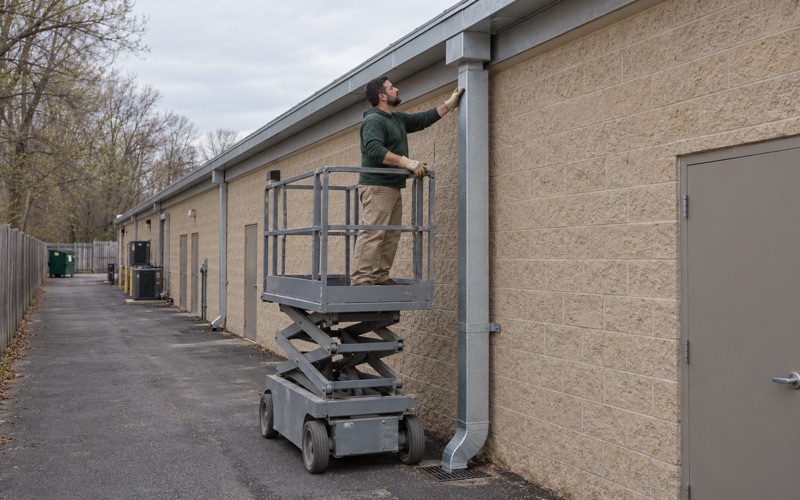
Howell Gutters has spent more than 20 years installing, repairing and cleaning gutters in South River, and the job here starts somewhere most homeowners do not expect. Before we price a single run of trough, we walk the house and follow each leader to the spot where its water hits the ground. On a low lot, that landing spot matters more than the color or profile of the gutter above it.
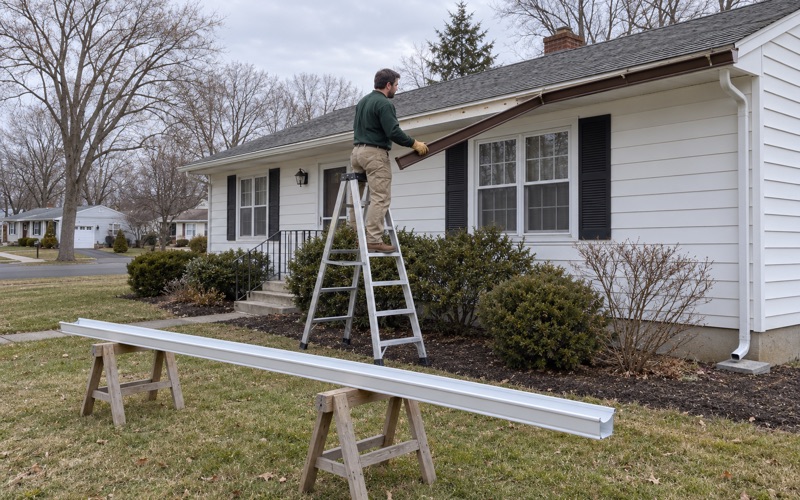
We form seamless gutters on site from coil, one piece per run, and size both the trough and the downspouts to the roof area that actually drains into them. A rear slope that collects two roof planes gets a bigger outlet than a short porch run, rather than whatever size a crew happens to carry on the truck. Our written estimate also states where every leader will discharge, so you can see the plan before any work begins.
Repairs and new installations appear on separate lines of that estimate, because New Jersey taxes them differently. Our contracts follow the state’s home improvement rules, including the three-day cancellation notice, and every cleaning or repair visit comes with before-and-after photos you can keep.
Gutters in a Borough That Floods From Its River
South River takes its name from the river that forms its eastern and northeastern boundary, a tidal tributary of the Raritan. That tide is the part outsiders miss. The borough’s Strategic Recovery Planning Report, prepared in March 2014, describes a chronic history of flooding and says the river’s banks overtop during yearly storm events, hurricanes and nor’easters, and even during times of non-storm high tide.
What the 2012 Water Line Showed
The same report records what happened on the night of October 29, 2012. At about 9:00 p.m., the waterline measured 28 inches on Reed Street and as high as 40 inches on Washington Street. Most homes east of Water Street took on several feet of water on the ground floor, with the worst damage concentrated on Water, Lee, Elizabeth, Russell and Martin Streets.
That night was not an isolated event. The borough’s own Flood Information page notes that South River residents filed 353 flood insurance claims totaling $12,131,273.50 between 1978 and 2013, and it names Hurricane Irene alongside Sandy as flood events.
Why No Wall Is Coming
An Army Corps of Engineers project to protect the borough was authorized in 2007, with a 320-foot surge barrier across the river and roughly 10,712 feet of levees. The 2014 report states that no construction had occurred and called the project uncertain and unlikely. The state’s Blue Acres program bought out floodplain houses instead, and a 2019 NJDEP release counted 106 South River purchases and 96 demolitions.
What a Gutter Can and Cannot Do Here
We want to be plain about this. No gutter system holds back a tidal river, and nothing we install will keep a property out of a flood or change its insurance picture. What a well-planned system can do is avoid adding roof water to soil that is already saturated, which is a smaller job but a real one.
Looking for gutters closer to Robbinsville? See Gutters in Robbinsville.
Where Roof Water Goes East of Whitehead Avenue
The recovery report places the borough’s flood-prone areas east of Whitehead Avenue, through the entire Waterfront Revitalization District and along the streets near the river. On these lots, the ground can sit wet for days after a high tide or a heavy rain. A leader that empties straight against the foundation sends a whole roof plane’s runoff into the one spot a homeowner most wants to keep dry.
Leader Discharge Comes Before the Trough
That is why our work on the low eastern streets begins at the leader outlet, not at the gutter line. We look at where the outlet sits, which way the yard pitches, and whether the water has a path away from the house once it lands. The connection between roof runoff and wet foundations on these streets is our reading of the flood report and ordinary drainage practice, not a borough finding, but it shapes every estimate we write here.
The residential building code that New Jersey follows asks for grade to fall 6 inches within the first 10 feet from a foundation. Many older lots near the river were graded long before anyone measured that, and some have settled since. Where the slope runs toward the house, moving the discharge point is often the most useful change we can make.
Extensions, Splash Blocks and Emitters
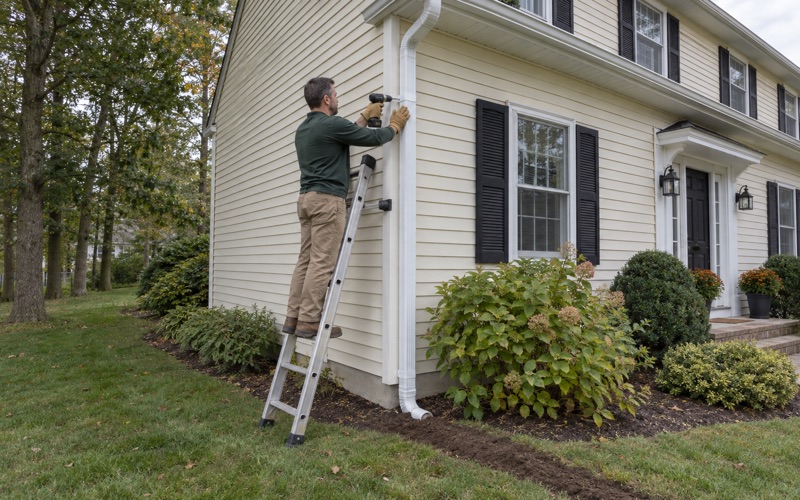
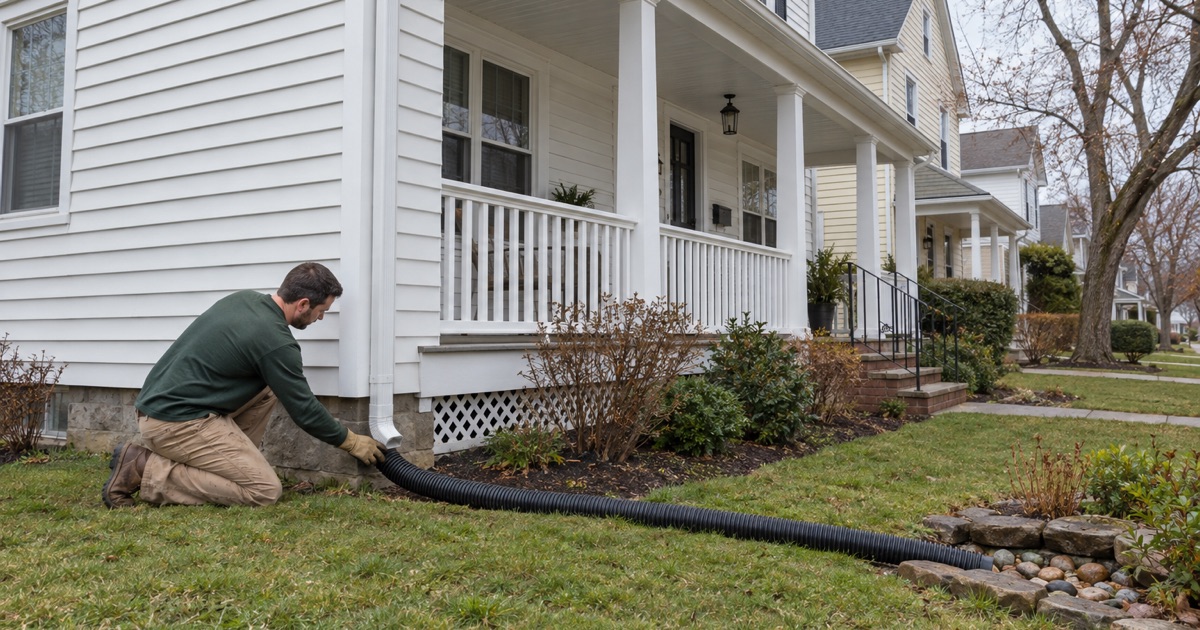
On most South River lots, a simple solution does the job. A downspout extension carries water several feet out, and a splash block keeps it from digging a trench where it lands. Where an extension would cross a walk or a driveway, an underground line to a pop-up emitter moves the water farther from the house and leaves the lawn clear.
We are careful with drywells on the low streets. A drywell needs room between its base and the water table to work, and ground that floods from tide may not have that room for much of the year. When we judge that a drywell would sit in wet soil, we say so and propose an extension or emitter instead.
Never Into the Sewer
Leader outlets are never tied into the sanitary sewer on any job we do. Sending roof water into a sewer line overloads the system during the very storms that already stress it. Our estimate names each discharge point in writing, so there is no question later about where a leader ends.
Older Houses, Painted Fascia and Lead-Safe Work
South River’s housing stock skews old. Census figures count 4,324 of the borough’s 5,754 housing units as built before 1980, about three in four, with the largest groups dating to the 1950s and 1960s. Most of these houses carry painted wood fascia boards behind the gutters, and decades of overflow have often softened that wood.
Checking the Board Before It Carries New Metal
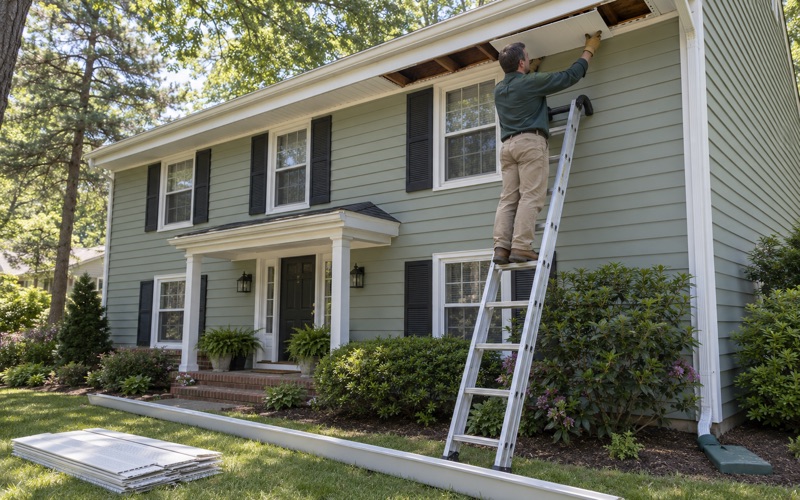
Before new gutters go up, we probe the fascia along each run for rot. When we find soft wood, we show it to you before replacing it, rather than reporting it after the fact. Hanging a new seamless gutter on a board that will not hold a hanger only moves the failure a few years down the road.
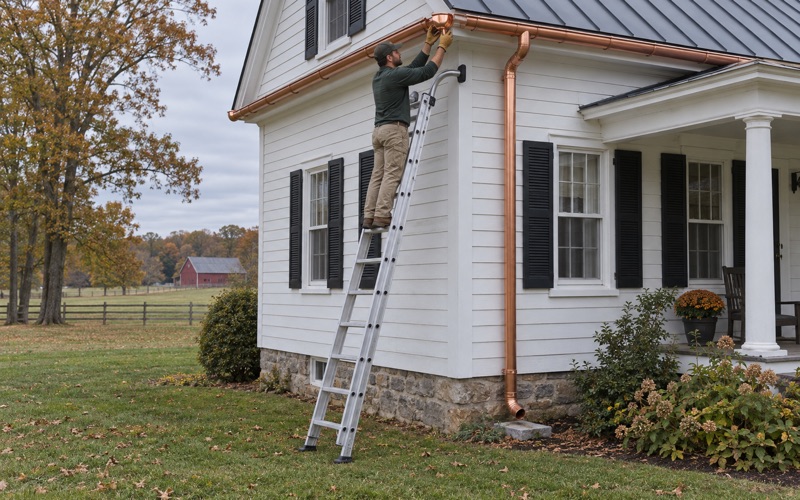
We hang most runs on hidden hangers screwed into solid wood, which hold better over time than the old spike-and-ferrule method common on houses of this age. On colonials and older homes where the original look matters, we can match half-round or copper work to the age and style of the house.
Painted Surfaces on Pre-1978 Homes
Pulling an old gutter off painted fascia can disturb lead paint on a house built before 1978. The EPA’s Renovation, Repair and Painting rule treats exterior work that disturbs 20 square feet or less of painted surface as minor repair, and work beyond that threshold requires lead-safe practices. We plan fascia work with that limit in mind and explain which side of it your job falls on.
Landlords should also know that the borough sets a $250 visual inspection fee for lead-based paint inspections of residential rental dwellings, plus a $45 per-unit filing fee for lead-safe or lead-free certification, under Ordinance 2025-18 as introduced in June 2025. About a third of occupied homes in South River are renter-occupied, so this touches a meaningful share of the properties we see.
The Maintenance Code and a Sale
South River adopts the International Property Maintenance Code, whose Section 304.7 calls for roof drains, gutters and downspouts to be maintained in good repair and free from obstructions. The borough also requires a certificate of continuing occupancy before an existing home is sold. If you are preparing to list, sagging or clogged gutters are worth fixing on their own merits, and our photos give you a record of the work.
Leaf Season, Guards and the Curbside Program
Tree canopy covers about 24.7% of South River, according to American Forests data updated in February 2026. A single mature oak or maple over a roofline can still fill a gutter in a few weeks of autumn. On the low streets, a clogged trough that spills over the front edge drops its water right at the foundation, which undoes the planning that went into the leader outlet.
Working Around the Curbside Leaf Program
The South River Department of Public Works runs a Curbside Leaf Program that begins October 19 and continues into mid-December, split into Southside and Northside at the railroad tracks. Leaves must go out in biodegradable paper bags or open containers, since plastic bags are refused, and they cannot sit closer than 10 feet to a storm drain inlet. Under the borough’s stormwater rules, loose leaves may be put at the curb only seven days before your scheduled pickup.
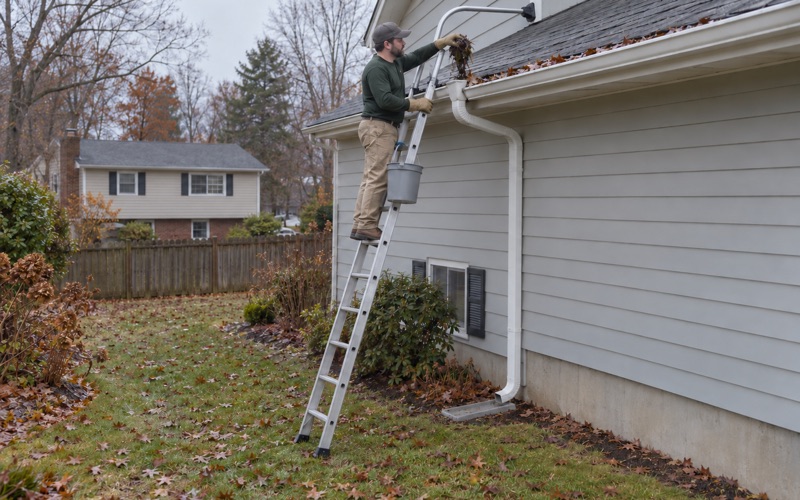
Our cleaning visits work within that system. We flush every downspout and bag all the debris, so nothing is left on the lawn or piled at the curb outside your collection window. Check the DPW’s current schedule for your side of the tracks before planning a fall cleaning around it.
Matching Guards to the Trees on the Lot
Guards make sense on some South River homes and not on others. We match the screen to the trees overhead, because broad oak and maple leaves call for a different guard than fine needles or seed pods. Stainless steel micro-mesh handles the widest range of debris, while a lot with no trees close to the roof may need nothing beyond a yearly cleaning.
When you call Howell Gutters about a home in South River, expect us to start at the ground and work up. We will show you where your water goes now, where we propose to send it, and what the fascia behind your gutters looks like before anything new goes up.
- 20+ Years in Business
- Seamless Gutters Formed On Site
- Before-and-After Photos