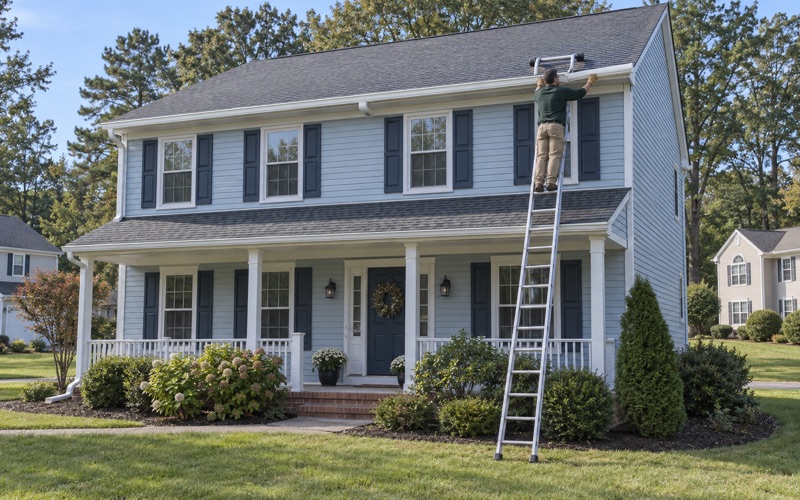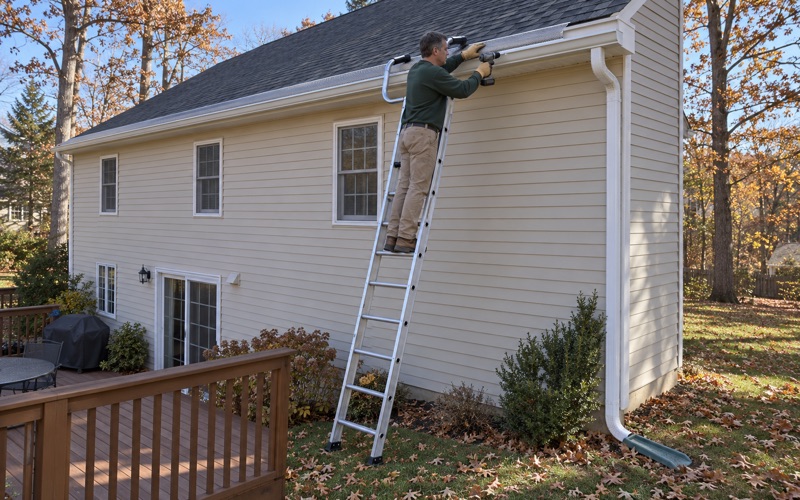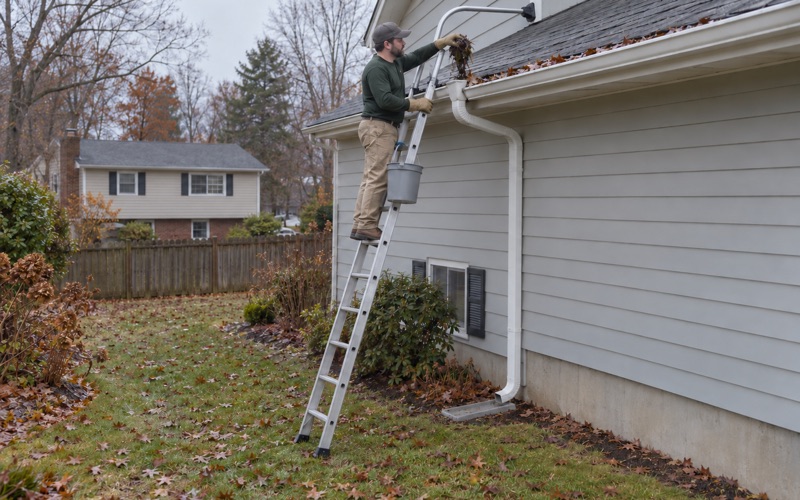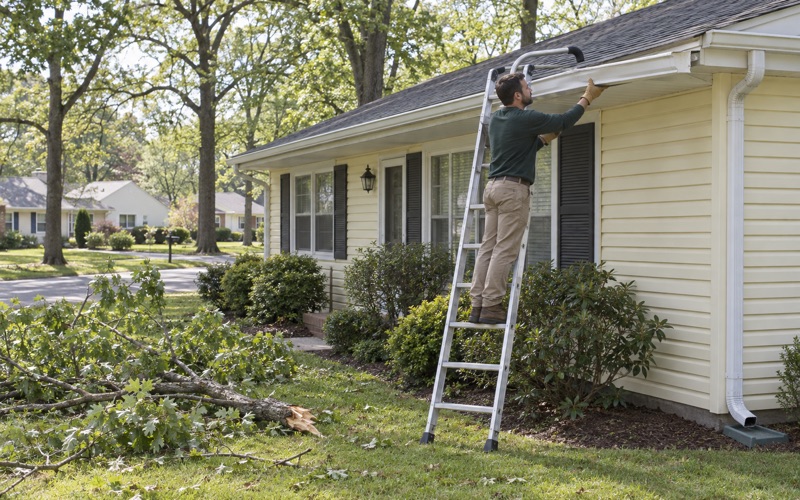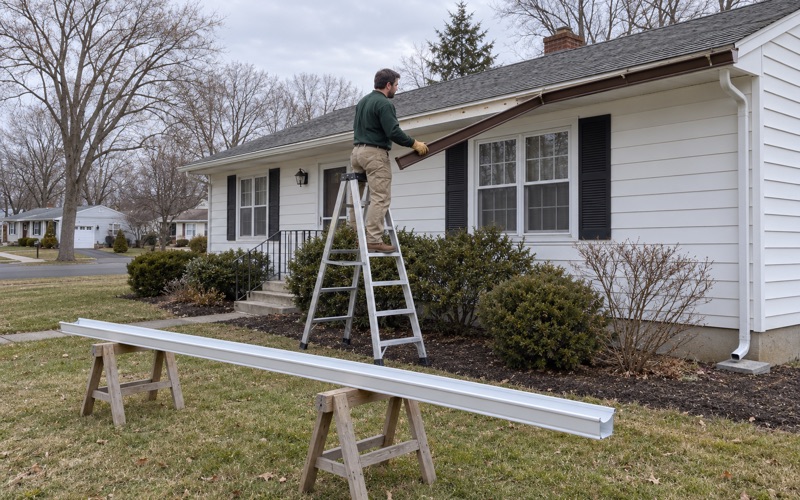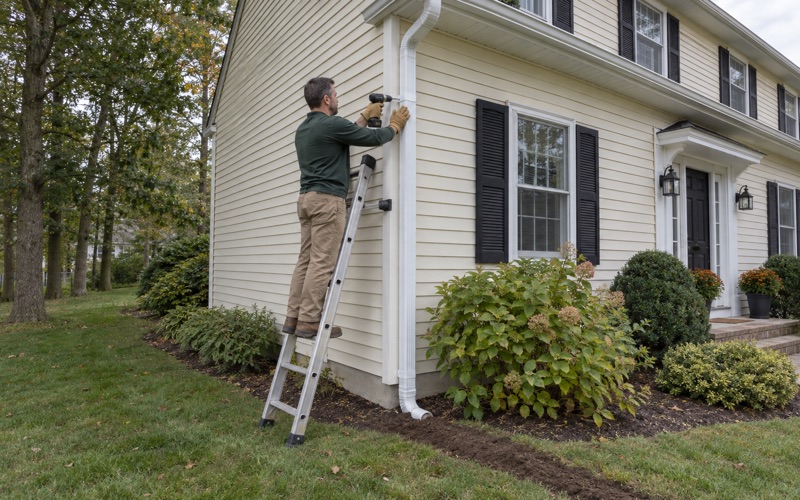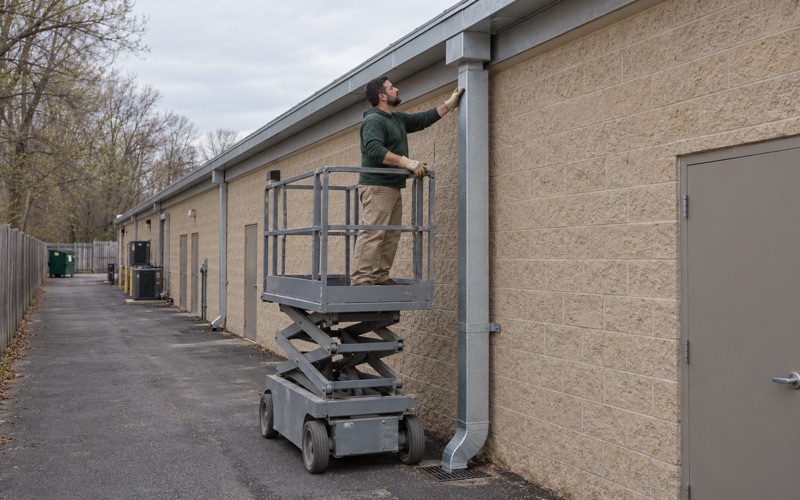
Howell Gutters brings more than 20 years of experience to gutters in South Amboy, and the work here starts with a question most estimates skip: what is the board behind the gutter made of, and what is on it? We size every run for the roof area that drains into it, form seamless gutters on site from coil, and follow each downspout to where its water actually lands.
On an older house, the gutter is only half the job. The fascia it hangs from has usually been there far longer than any gutter, and it often carries decades of paint. How that board is handled decides how the project is planned, priced and scheduled, so we look at it before we quote a single foot of new gutter.
This page explains what changes about gutter work on South Amboy’s housing, from pre-war wood trim to the newer townhouses closer to the water. If you own a single-family home, a two-family rental or a unit in a newer building, the sections below cover what to expect.
Gutters on South Amboy’s Pre-War Houses
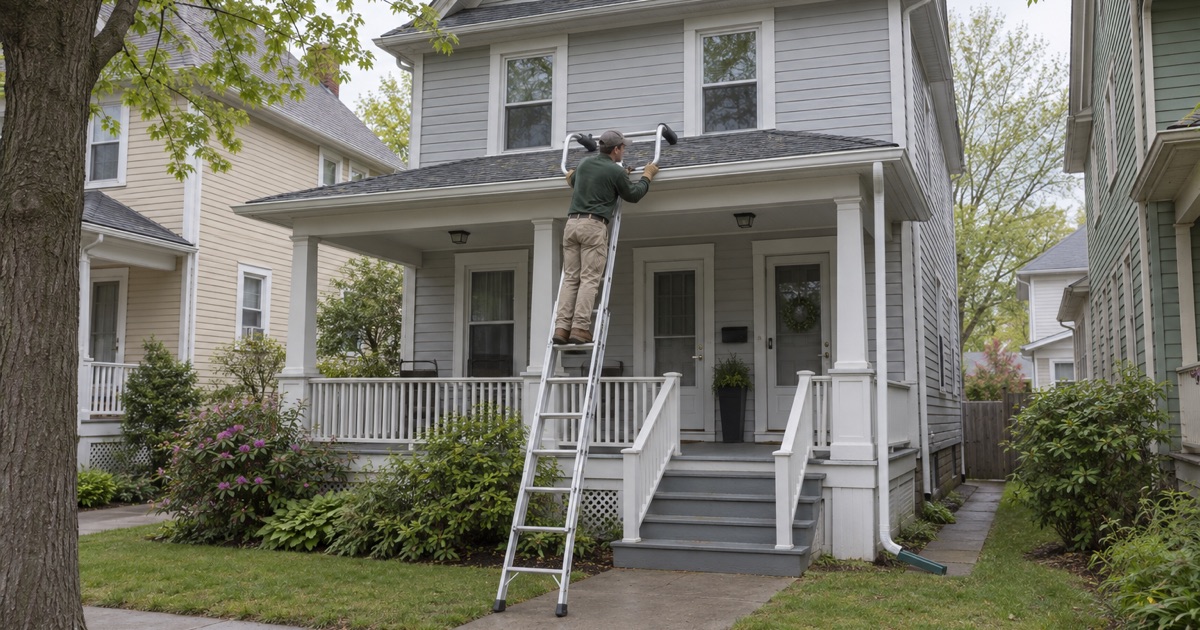
South Amboy’s housing core is old. Census figures (ACS 2024, five-year estimates) count 1,726 of the city’s 4,493 housing units, or 38.4%, as built in 1939 or earlier, and 44.5% were built before 1950. That is a lot of houses whose eaves, trim and drainage were laid out long before seamless aluminum existed.
What older eaves usually look like
On houses of that age, the gutter is commonly fastened to a painted wood fascia board, with painted rake boards running up the gable ends. Many have already been through two or three generations of gutters, each one adding its own nail holes, spike holes and patched spots. Some still carry a sectional gutter with seams every ten feet, or a run that was pieced together after a storm.
Sizing the run to the roof, not the habit
Older roofs often have steep pitches, dormers and porch roofs that dump water onto a lower run. We measure the roof area that drains to each section and pick the gutter and downspout size from that, so a 6-inch K-style seamless gutter with 3x4 downspouts goes where the volume calls for it rather than everywhere by default. Where a valley concentrates water near an inside corner, the outlet placement matters as much as the gutter width.
Matching the house
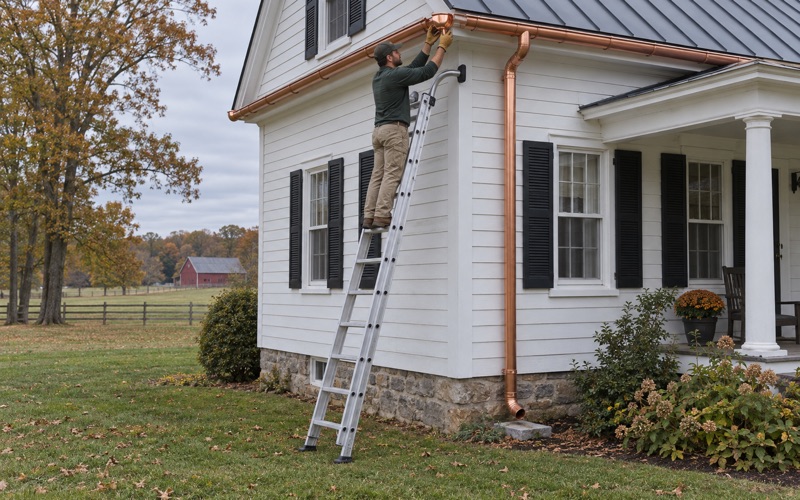
Some of the city’s older homes suit a half-round gutter with a double-bead profile, and a few owners ask for 16-ounce copper. We match copper and half-round work to the age and style of the house instead of pushing it everywhere, and we explain how copper weathers to its patina over time. For most pre-war houses, though, the more important decision is what happens to the wood behind the gutter.
Looking for gutters closer to Highland Park? See Highland Park Gutters.
What Sits Behind the Gutter: Painted Wood Fascia
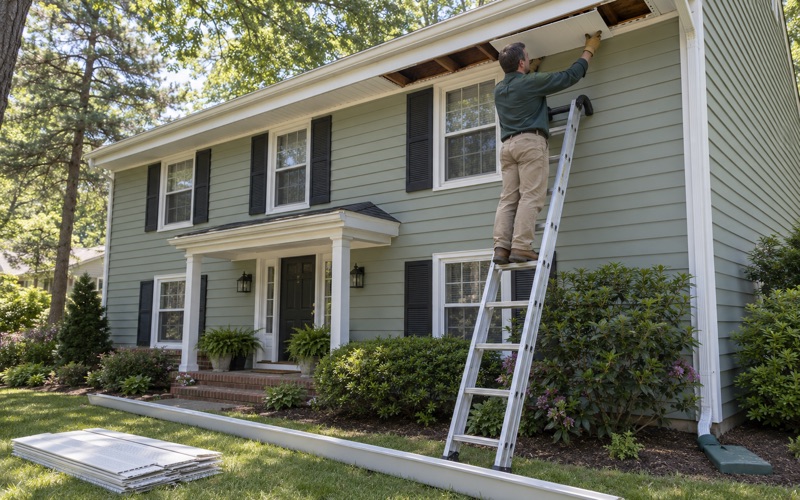
Before any new gutter goes up, we check the fascia for rot. Soft or split wood is shown to the owner first, so you see the damage before anything is replaced. On a house built before 1978, that check also tells us how much painted surface the job will disturb.
Why the paint matters as much as the wood
Lead-based paint was used on exterior trim for much of the last century, and houses built before 1978 fall under the EPA’s Renovation, Repair and Painting rule (40 CFR 745). Removing old gutter hangers, prying off a rotted fascia section or scraping trim to seat a new run all disturb painted surfaces. On a pre-war eave, that painted board is almost always the thing the gutter is fastened to.
Test before assuming
Whether a particular fascia holds lead paint is a test result, never an assumption. We do not tell an owner their trim is lead-free because it looks fresh, and we do not tell them it holds lead because the house is old. Paint that looks recent may sit over older layers, and a house that has been resided may still have original boards hidden behind trim coil.
When the age of the house puts it under the rule, the practical step is to find out before the work starts. That way the estimate reflects what the job really involves, instead of turning into a surprise after the first board comes off.
Repair or replace
Not every eave needs new wood. Where the fascia is sound, we can often hang the new gutter on the existing board with hidden hangers and limit how much paint is disturbed. Where the wood has rotted behind the old gutter, replacement is the honest answer, and the amount of painted surface involved changes the plan.
Lead-Safe Practices When Fascia Comes Off
The RRP rule draws a clear line for exterior work. Under 40 CFR 745.83, minor repair and maintenance on the outside of a house is work that disturbs 20 square feet or less of painted surface, without prohibited practices, window replacement or demolition of painted surfaces. Past 20 square feet of exterior painted surface, the work falls under the rule’s lead-safe requirements.
How fast a gutter job reaches 20 square feet
Twenty square feet sounds like a lot until you measure an eave. A long run of fascia replaced along the front of a two-story house, plus a couple of rake boards on the gable ends, can pass that threshold quickly. Scraping and repainting trim after the new gutter goes up adds to the same total.
That is why we measure the painted area a job will disturb, not just the length of gutter. If the work stays small, it stays small on paper too. If it will clearly cross the line, we say so before you sign anything.
What changes on a larger job
On work that falls under the rule, the job site is set up differently: containment below the work area, limits on how paint is removed, and careful cleanup of debris and dust at the end. Those steps take time and material, and they belong in the estimate rather than in a change order halfway through.
We also list new gutters and repair work on separate lines, because New Jersey taxes them differently. Under the Division of Taxation’s guidance, new gutters are an exempt capital improvement on Form ST-8, while repairing gutters is a taxable repair. Every contract is written to New Jersey’s home improvement rules, including the three-day cancellation notice.
Where the water goes afterward
Older lots were often graded long before anyone thought about where a downspout should end. We follow every downspout to its discharge point, and when it lands against the foundation we propose an extension, a pop-up emitter or a drywell. Leader outlets are never tied into the sanitary sewer, and the estimate says where each one will discharge.
Two-Family Rentals and Newer Townhouses Near the Bay
South Amboy is close to half rented. Census figures put 43.5% of occupied units as renter-occupied, with 435 rented units in two-unit buildings and 294 in buildings of three or four units. Many of those are older two-family houses, and they bring the same painted-fascia questions as any pre-war home, with a tenant living under the work.
Working on a two-family house
On a two-family or small multi-unit building, a gutter replacement often runs over two entrances, two porches and two sets of windows. We plan the order of work so tenants keep a usable entry, and we keep debris contained rather than letting old paint chips and hangers fall onto shared walkways. Cleaning visits flush every downspout and bag the debris, so nothing is left on the lawn or at the curb.
New Jersey’s 2021 lead-safe rental law also brings older rental units under inspection for lead-based paint hazards. That is a statewide requirement, and owners should confirm the local inspection steps with the city. For gutter work, the takeaway is simple: on an older rental, fascia work and paint disturbance deserve the same attention they get on an owner-occupied house.
The newer half of the city
The housing stock splits in two. Alongside the pre-1950 core, 892 units, or 19.9%, were built between 2000 and 2009, and another 345 between 2010 and 2019, much of it townhouse and multifamily housing near the station and the bay. Pre-1978 paint rules do not reach those newer units.
Gutter work on that stock looks different. Fascia is usually wrapped in aluminum or built from newer materials, so the job centers on sizing, outlets and drainage rather than paint. In a townhouse or condominium building, we check the master deed or management office first, so the owner knows whether the association or the unit owner is responsible for the gutters.
Guards, leaves and the shoreline
South Amboy’s tree canopy is thin, at 15.6% against a 45.0% goal according to Curb Canopy data from American Forests. On many lots, leaf load in the gutters is correspondingly light, though a single large tree over one run can still fill it every fall. We match guards to the trees actually on the lot, from stainless steel micro-mesh to simpler screens, instead of recommending the same product for every house.
The city sits on Raritan Bay, with the Raritan River along its northern edge, and water makes up about 42.76% of its total area. For homes near the water, we talk through material choices and drainage with the same care we give the fascia. Whatever the age of your house, we will measure it, show you what we find behind the old gutter and put every step in writing before the work begins.
- 20+ Years in Business
- Seamless Gutters Formed On Site
- Before-and-After Photos