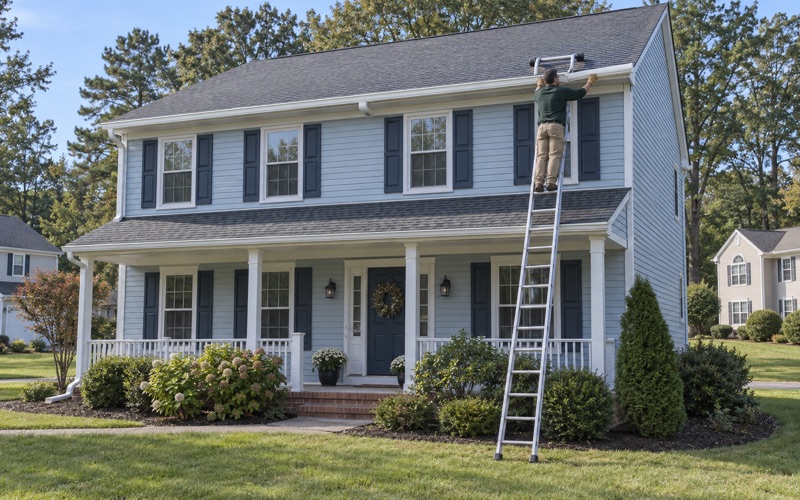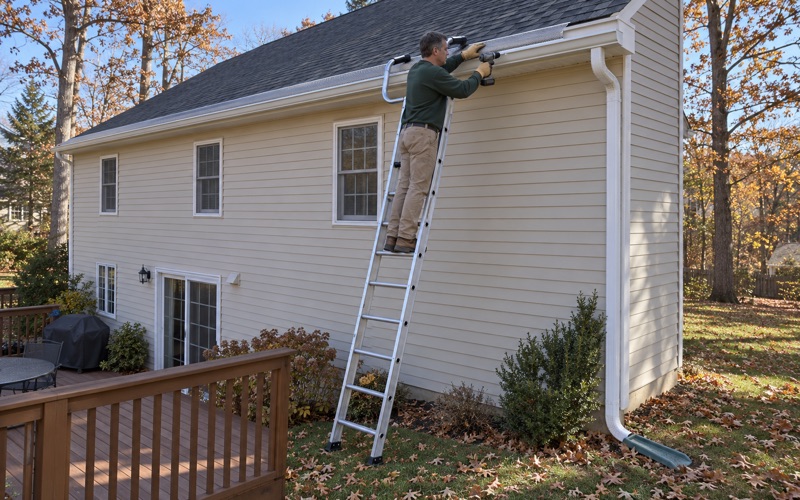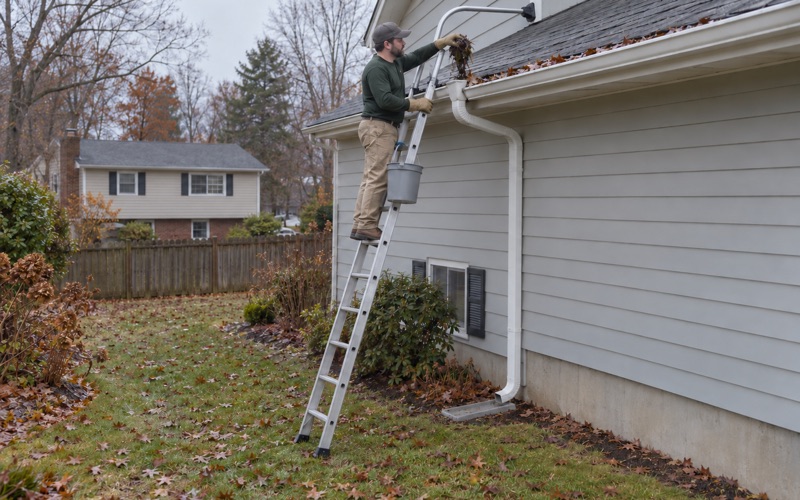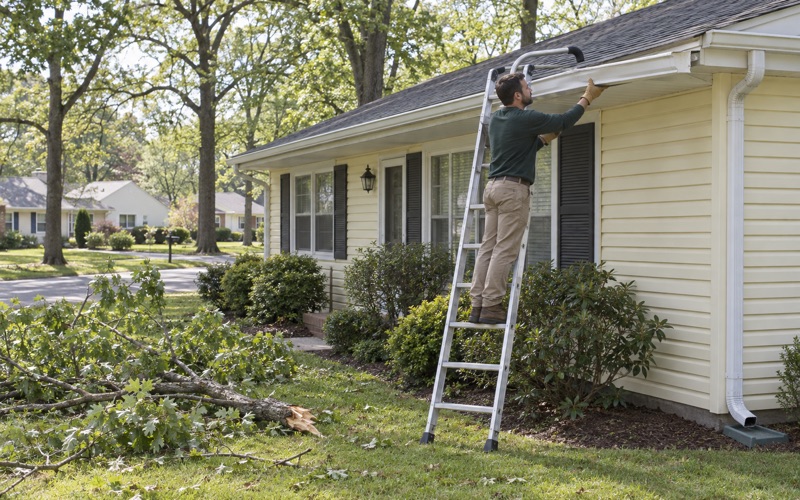
Howell Gutters has spent more than 20 years on gutters in Metuchen and across central New Jersey, and the work here starts with a look up at whatever is growing over the roof. Big shade trees decide how often a gutter fills, what it fills with, and which guard will actually keep it running. We size, install, clean and repair gutters with that canopy in mind, not around it.
Most of the calls we get from the borough come down to one of three things: a gutter that overflows every autumn, a downspout that chokes on seeds in spring, or an old system that sags under a winter of packed leaves. Each has a fix, and the fix depends on the tree. A red maple and a London plane fail a gutter in different ways and at different times of year.
Every estimate we write puts new gutters and repair work on separate lines, because New Jersey treats the two differently for sales tax. Contracts follow the state’s home improvement rules, three-day cancellation notice included, so you know what you are signing before any coil comes off the truck.
Gutters Under Metuchen’s Old Street Trees
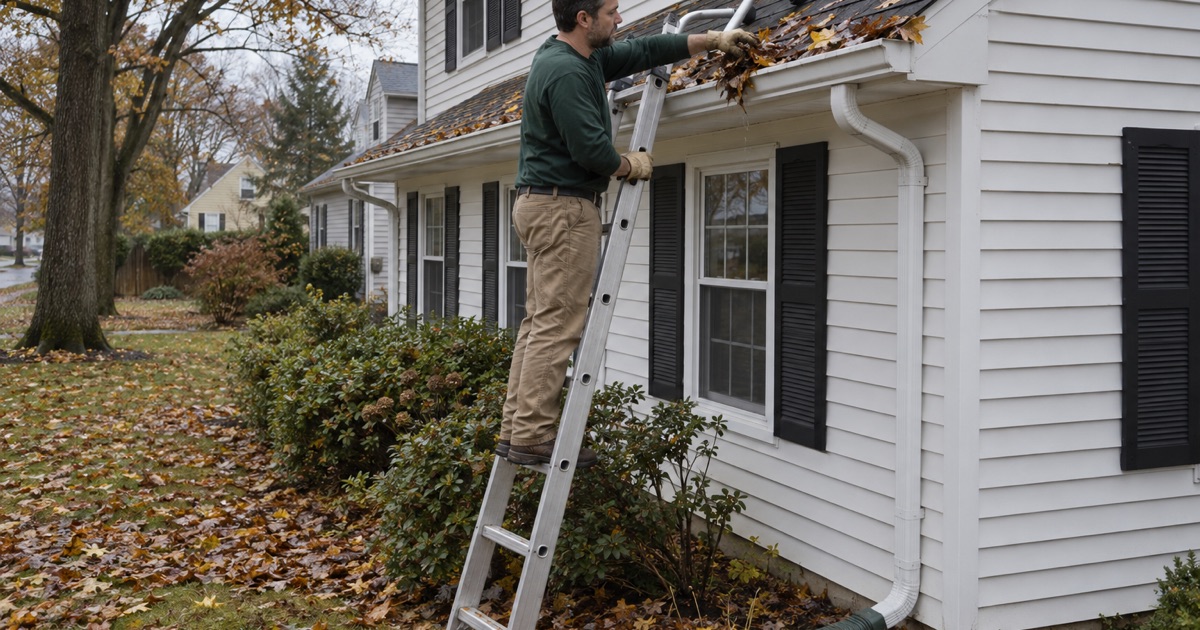
Metuchen is a suburban borough in Middlesex County, a commuter town on the Northeast Corridor with a canopy that has been growing far longer than most of its houses. The borough’s Third Community Forestry Management Plan, which covers 2025 through 2029 and was approved by the NJ Forest Service on January 14, 2026, describes years of slight canopy decline tied to tree stock first planted more than a century ago.
What the 2025 Count Found
In the last week of September 2025, volunteers sampled street trees on about sixty blocks and inventoried 528 of them. London planes were the largest single group at 92 trees, or 17% of that sample. Red maple followed at 15%, red oak at 8% and pin oak at 7%, and maples as a genus made up 27% of the trees counted.
Those are shares of a sample, not a census of every tree in town, but they match what we see from a ladder. The plan notes that London planes were planted in disproportionate numbers early in the twentieth century and that many are at or near the end of their lifespan.
Aging Trees Shed More
Condition in the sample tells the rest of the story. Only 29% of the trees were rated good, while 22% were poor, 11% very poor and 3% dead or dying, and one-third of the very-poor trees were London planes. A high proportion of the diseased trees were older planes showing signs of anthracnose.
From a gutter’s point of view, a declining tree is a busier tree. It drops twigs, bark and dead leaf clusters through the growing season, not just in October, and much of that lands on the front slope of the roof nearest the street.
Most of the houses beneath that canopy are postwar. Census estimates put 38.9% of the borough’s housing units in the 1950s and 1960s, and about three in four occupied homes are owner-occupied. Many of those houses are on their second or third set of gutters, often hung with spikes that have loosened over decades of leaf weight.
Looking for gutters closer to Ramtown? See Gutters in Ramtown.
What London Planes, Maples and Oaks Drop Into Gutters
Each of the dominant street species fills a gutter in its own way, and knowing which tree is overhead tells us what to expect before we set a ladder. Here is what we pull out from under the three big groups in the borough’s count.
London Planes
Plane leaves are large, stiff and slow to break down. They lie flat across a gutter mouth and form a mat over the outlet, which is why a gutter under a plane can look half empty and still overflow at the first hard rain. Anthracnose can bring early leaf drop in a wet spring, so a plane may fill a gutter twice in one year.
Planes also shed bark in plates and drop spiky seed balls that wedge into elbows. We flush every downspout on a cleaning visit for exactly that reason, since a clear trough means little if the elbow below it is packed.
Maples
Red, sugar and Norway maples together account for a large part of the street sample, and all of them release winged seeds in spring. Those seeds slide into downspouts in quantity, then sprout in the wet debris left in a trough. A gutter that was clean in December can be growing seedlings by June.
Maple leaves are thinner than plane leaves and pack down tight once wet. The result is a dense layer that holds water against the gutter seams and the fascia behind them, which is where rot and leaks begin.
Red and Pin Oaks
Oaks drop catkins in spring, acorns in late summer and fall, and leaves that hang on late. Pin oaks are known for holding brown leaves well past the first frost, which stretches the cleaning season toward December. Acorns rolling down a roof collect at outlets and make a hard plug that a garden hose rarely clears.
Guards and Gutters Matched to the Tree Over Your House
We choose guards after we have identified the trees on and around the lot, because no single screen handles every species well. Oak leaves and pitch pine needles call for different screens, and the same logic separates a London plane from a maple.
Screens for Seeds and Fine Debris
Under maples, the problem is small winged seeds and broken leaf fragments. Stainless steel micro-mesh guards stop them at the surface while still letting heavy rain through, and dry leaves tend to blow off the top. They do need an occasional brush-off, and we tell owners that up front rather than selling them as maintenance-free.
Coverage for Big Leaves and Bark
Under a large plane or oak, a guard has to carry the weight of a wet mat of leaves without collapsing into the trough. We use rigid guards fastened into the gutter, and we pair them with 6-inch K-style seamless gutters and 3x4 downspouts where the roof area justifies it, so whatever slips past has room to move.
Sizing comes from the roof area that drains to each run, not from habit. A short back run under a small ornamental may need nothing beyond a standard gutter, while a long front run under a street tree can need a larger downspout and an extra outlet.
Hangers, Fascia and Seamless Runs
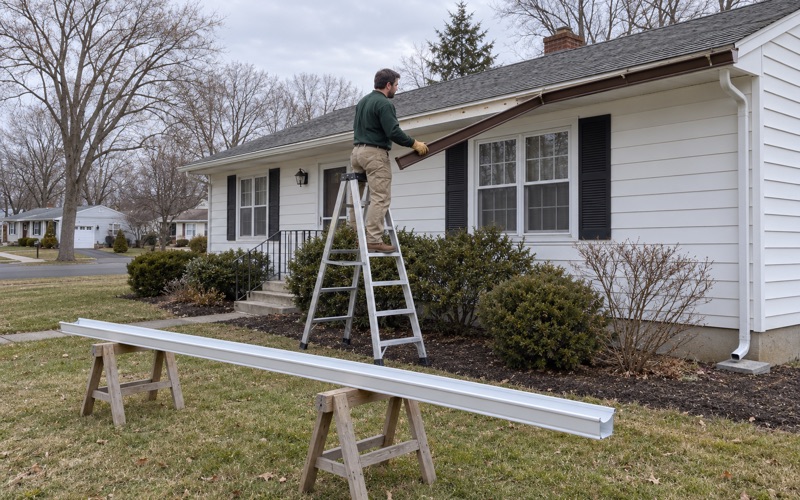
Leaf weight is hard on fasteners. We hang new gutters on hidden hangers rather than spike and ferrule, and we form seamless gutters on site from .032 aluminum coil, one piece for each run, so there are no mid-run seams for wet debris to work on.
Before anything new goes up, we check the fascia behind the old gutter for rot. If the wood is soft, we show it to you before it is replaced. On pre-1978 houses with painted fascia and trim, we follow the EPA Renovation, Repair and Painting rule whenever that paint is disturbed.
The Borough’s Trees, Your Gutters and the Fall Routine
Street trees in Metuchen are not the homeowner’s to manage. All borough trees are maintained by the Department of Public Works division of Shade Tree, and the Shade Tree Commission, established in 1966, regulates the planting, care and control of trees on the borough’s streets and public places. Pruning or taking down a tree under its jurisdiction requires a permit.
The borough will not allow residents to remove healthy trees. So if a big plane or maple overhangs your roof, the practical choice is managing what it drops rather than the tree itself. That is where gutter size, guard choice and a cleaning schedule do the real work.
The canopy is also something the borough wants to grow. American Forests’ Curb Canopy data puts Metuchen’s cover at about 39.2% against a 48.2% goal, and the Shade Tree Commission’s May 2026 minutes recorded discussion of planning to replace aging London planes. New plantings mean the leaf load on many streets is not going away.
Bagged Leaves and Clear Inlets
The Department of Public Works requires leaves to go to the curb in biodegradable bags only, and they are not to be raked into the street. The borough warns that loose leaves risk flooding if heavy rain washes them into storm inlets, and residents who rake into the street are told to bag them immediately. The borough no longer hands out leaf bags, so residents buy their own.
That rule shapes how we clean. Every cleaning visit bags the debris we pull from the gutters and takes it with us, so nothing is left on the lawn, in the street or at the curb for you to handle.
During rain and snowstorms, DPW keeps catch basin inlets clear of leaves and debris. Your downspouts are the private end of that same drainage picture, and we follow each one to where its water lands. If it drops against the foundation, we propose an extension, a pop-up emitter or a drywell, and we never tie a leader into the sanitary sewer.
Timing Fall Cleanouts
Under oaks and planes, one cleaning after the leaves drop is rarely enough. We usually suggest a visit once the bulk of the leaves are down and a second in late fall for the pin oaks that hold on, plus a spring check if maples overhang the roof.
Each cleaning and repair comes with before-and-after photos, so you can see the outlets and elbows we cleared without climbing up yourself. Where the photos show a sagging run or soft fascia, the estimate that follows lists the repair and any replacement on separate lines.
- 20+ Years in Business
- Seamless Gutters Formed On Site
- Before-and-After Photos