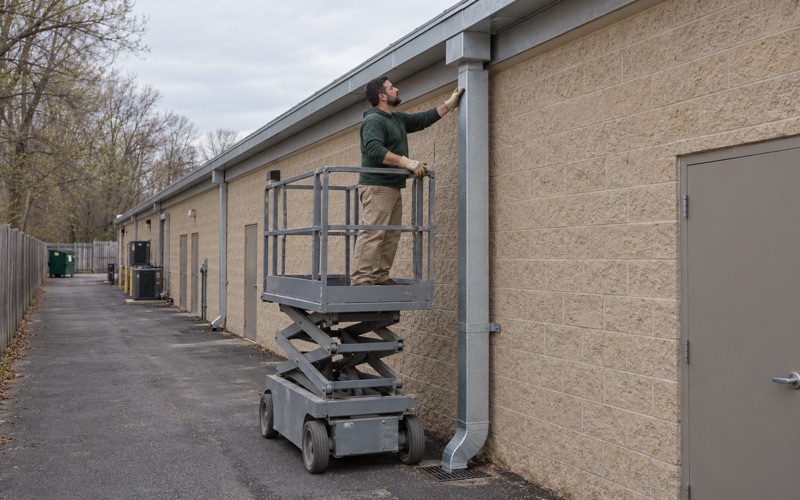
Howell Gutters installs, repairs and cleans gutters in Highland Park, and after more than 20 years on New Jersey roofs we start each job by asking where the water goes once it leaves the downspout. A gutter that catches rain well and then dumps it across a walkway has only done half its work. That question carries more weight here than in most towns, because the borough has written its own rules about discharge.
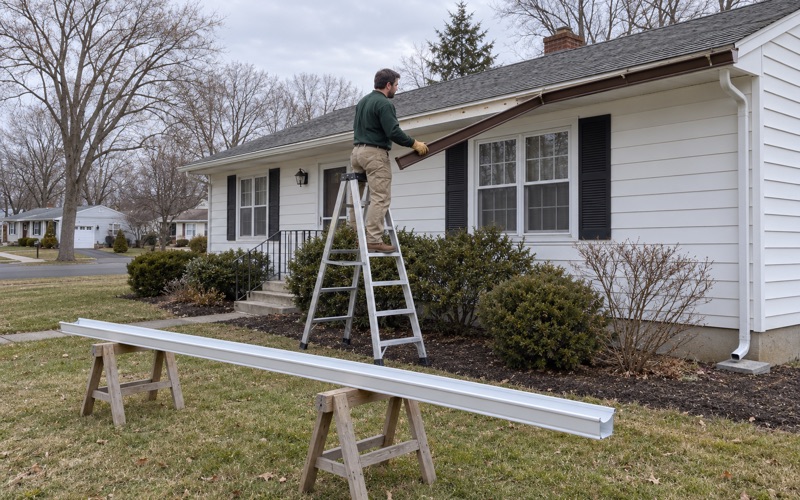
Our estimates name the discharge point for each leader outlet, and the work is sized to the roof that feeds it. Gutters and downspouts are matched to the square footage draining into each run, and seamless sections are formed on site from coil so each side of the building gets one continuous piece. When the fascia behind an old gutter has gone soft, we show the owner the wood before anything is replaced.
In Highland Park we work for landlords with small rental buildings as well as for families living in owner-occupied houses. Either way, the conversation covers capacity, outlets and the ground at the bottom of each downspout.
Highland Park’s Rule on Where Drain Water Lands
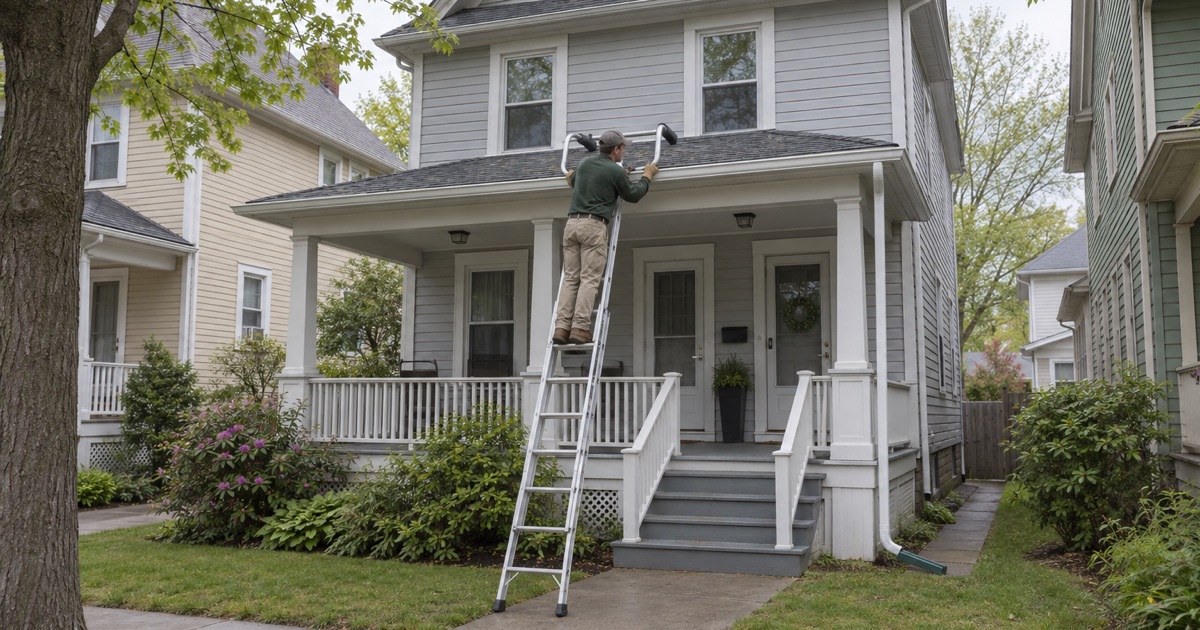
In February 2025 the borough adopted Ordinance 25-2100, which added Sections 356-8.1 through 356-8.5 to Chapter 356, the stormwater management chapter of the borough code. The new sections regulate sump pump and pipe drain discharge. They bar owners from installing or keeping any device that lets that water discharge onto a street, sidewalk or public right-of-way, except as the sections allow.
What the sections say about location
For sump pumps and pipe drains installed after the sections took effect, the discharge should preferably be directed onto an absorbent surface such as grass, mulch, rock or soil. The discharge location is approved by the Director of Code Enforcement, or a designee, before a permit is issued. Discharge into a borough street or right-of-way happens only with that director’s permission.
Where gutters fit into it
We have read the ordinance through published excerpts, not its full definitions, so we do not tell customers how the borough classifies a particular roof leader. What we do is treat every downspout as a discharge point that deserves a deliberate destination. When a new outlet or extension could send water toward a sidewalk or the street, we recommend that the owner confirm the location with Code Enforcement before the work is final.
That approach costs little and avoids redoing work later. A leader outlet moved once, to a spot the owner has already cleared, is cheaper than one moved twice. It also gives the owner a written record of where each run discharges, which helps when a building changes hands or a tenant asks about a puddle by the door.
The sanitary sewer is off the table
A separate part of the borough code covers sanitary sewers, and it bars roof drainage, sump pumps and cellar drainage from discharging into the sewer system. Our practice already matches that rule. We never tie a leader outlet into a sanitary line, and when we find an old connection we flag it and propose a surface or drywell alternative instead.
Looking for gutters closer to Bordentown Township? See Gutters in Bordentown Township.
Moving Outlets Off the Sidewalk and Street
Highland Park sits on the north bank of the Raritan River, and its housing stock is old. Of the borough’s 6,759 housing units, 1,854 were built in 1939 or earlier, and the Livingston Manor neighborhood was almost completely built by 1925. Houses and apartment buildings from those decades often sit close to the sidewalk, which leaves little room between a downspout and the public way.
Reading the run before changing it
When we look at an outlet that empties toward the street, we start at the roof. We measure the area draining into that gutter run, check the pitch, and note whether a second outlet could split the load. Sometimes adding a downspout on the far end of the run sends half the water to a side yard or rear lawn, where the ground can take it.
Rerouting options
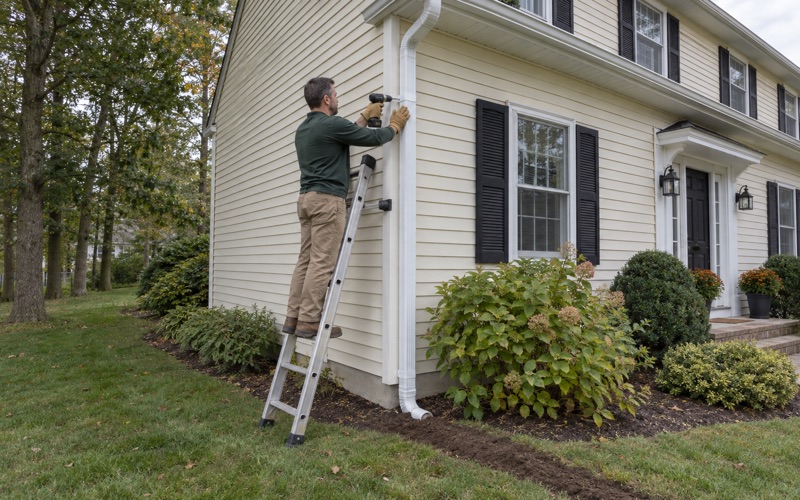
Rerouting is usually a matter of elbows and leader pipe. Box, strip and bay miters let a gutter turn a corner cleanly, while A and B elbows move the downspout along the wall to a better spot. A wide-flange outlet gives a larger opening on a busy run. Where the yard allows, an underground downspout line can carry water across the lot to a pop-up drainage emitter in the lawn.
Grade and the foundation
Moving water away from the sidewalk cannot mean dumping it against the foundation. The 2021 New Jersey edition of the residential code, at R401.3, calls for the grade to fall 6 inches within the first 10 feet from the foundation. We check the slope at each outlet and say plainly when the grade itself, not the gutter, is the problem.
Heavy downpours test the plan
Summer storms show quickly whether an outlet was placed well. On July 9, 2026, the borough reported that afternoon flooding damaged the section of River Road beneath the Amtrak railway arch and closed the road overnight. A burst like that sends a full roof’s worth of water to each downspout at once, so we size outlets and extensions for the heavy hour, not the average shower.
Downspout Extensions, Splash Blocks and Absorbent Ground
The borough’s preference for absorbent ground lines up with how we already finish a downspout. Water that lands on grass, mulch, rock or soil can soak in, while water that lands on concrete keeps moving until it finds a curb, a basement window or a neighbor’s walk.
Extensions and splash blocks
On many lots a simple extension does the job. A hinged or fixed leader extension carries water a few feet past the foundation onto lawn or a planting bed, and a splash block keeps that spot from washing out. We place the outlet where it lands on soil or stone rather than on a driveway apron or a paved path.
Emitters and drywells
When the nearest absorbent ground is across a walkway, we propose an underground line to a pop-up emitter that opens only when water pushes through. For heavier flows, a drywell gives the water a buried chamber to soak from. New Jersey’s stormwater rule, N.J.A.C. 7:8, places dry wells 2 feet above the seasonal high water table, so we confirm site conditions before recommending one.
On tight lots, the only soil may be a narrow strip between two buildings or a small rear yard. We look for the patch of ground that can actually absorb the flow and route the line there. If no such spot exists, we tell the owner before any pipe goes in the ground.
The gutters above the outlet
None of this works if the gutter overflows before water reaches the downspout. We install 6-inch K-style seamless gutters in .032 aluminum coil with 3x4 downspouts on most buildings, fastened with hidden hangers rather than spike and ferrule. Drip edge, a gutter apron and kickout flashing keep water off the fascia and siding at the roof edge.
Older houses and copper
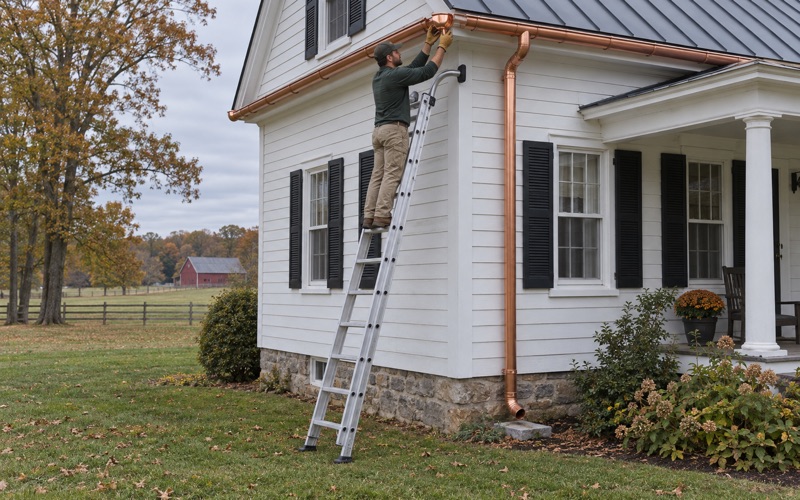
Some of the borough’s older homes look best with half-round gutters in a double-bead profile, or with 16-ounce copper that weathers to a patina. We match that work to the age and style of the house. On painted fascia and trim from before 1978, our work follows the EPA Renovation, Repair and Painting rule.
Small Rental Buildings, Landlords and Fall Leaves
Highland Park is a renter’s borough. Of 6,436 occupied units, 3,843 are rented, which works out to 59.7% renter-occupied. Many of those units sit in three- and four-unit buildings, a category that holds 1,310 units across the borough.
Who decides on the gutters
In a rented building, the tenant sees the overflow and the landlord makes the call. Changing where a leader outlet discharges is a decision about the property, and in Highland Park it can touch the discharge rules in Chapter 356. We write the estimate to the owner, list each outlet’s discharge point, and keep the paperwork clear enough to share with Code Enforcement if a location needs approval.
Paperwork owners already juggle
Rental units in the borough go through registration and change-of-occupancy inspections, and lead-based paint is part of that process. Landlords juggling those steps appreciate gutter work that arrives with records. Every cleaning and repair comes with before-and-after photos, and our contracts follow New Jersey home improvement rules, including the three-day cancellation notice.
Separate lines for repairs and new gutters
New Jersey taxes new gutters and gutter repairs differently. Under the Division of Taxation’s S&U-2 guidance, new gutters are an exempt capital improvement documented on Form ST-8, while repairing gutters is a taxable repair. We list the two on separate lines so an owner with several buildings can sort the invoices correctly.
Fascia on older buildings
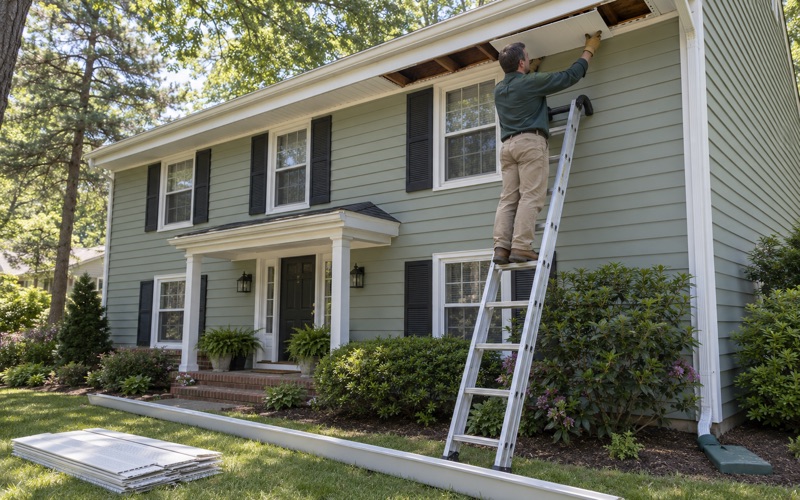
About 72.6% of the borough’s housing units were built before 1980, and decades of overflow often show up in the boards behind the gutter. Before new gutters go up, we probe the fascia along each run and photograph any soft sections. The owner sees the damage first and decides on replacement, so a rental building’s repair budget goes where the rot actually is.
Leaves, canopy and fall cleanouts
Tree canopy covers about 40.3% of the borough, according to American Forests’ Curb Canopy data, and that canopy ends up in the gutters each fall. During November and December, the Department of Public Works collects leaves curbside weekly, in biodegradable paper bags or loose in garbage cans. We time fall cleanouts to that window and bag the debris we pull, so nothing is left on the lawn or at the curb.
Guards matched to the trees
Oak leaves and fine needles call for different screens, so we look at the trees on the lot before recommending a guard. Stainless steel micro-mesh holds up well against small debris, while broad leaves often need a different profile. Every cleaning visit also flushes each downspout, because a clogged leader sends water over the gutter edge no matter where the outlet points.
- 20+ Years in Business
- Seamless Gutters Formed On Site
- Before-and-After Photos