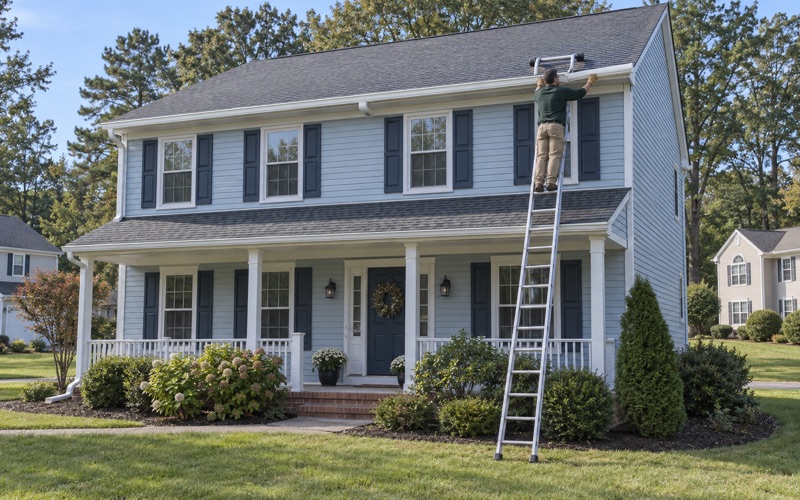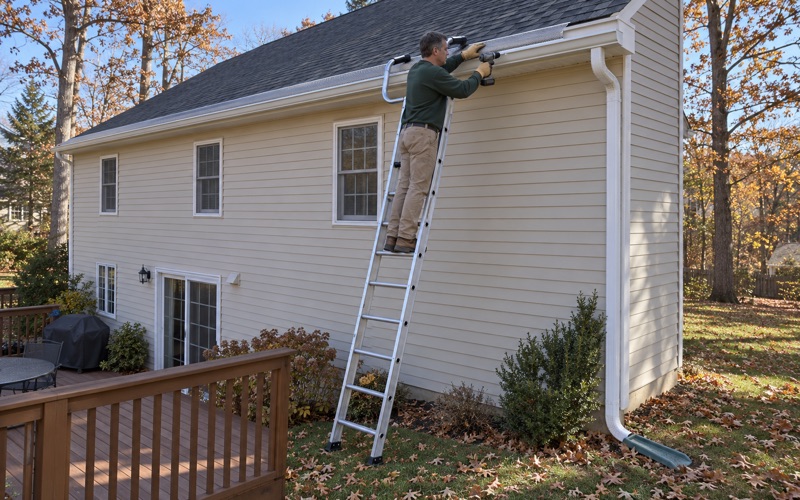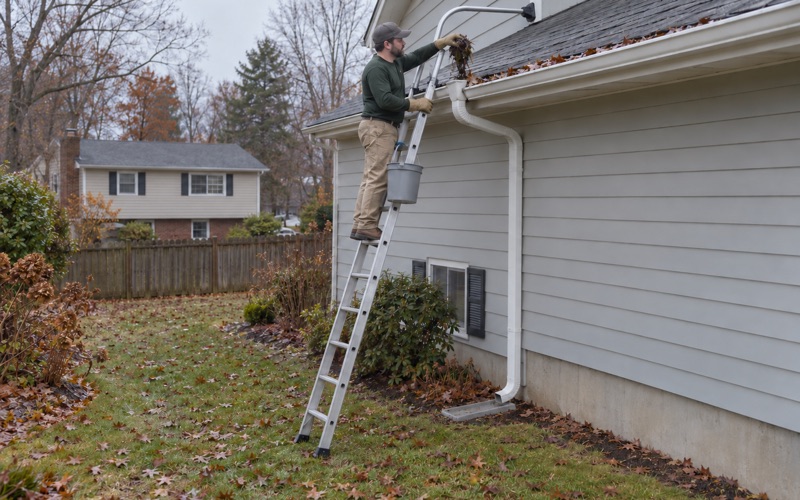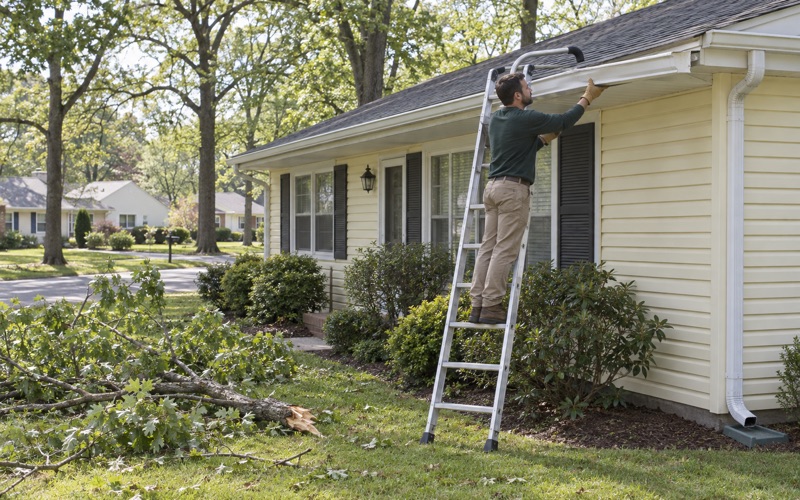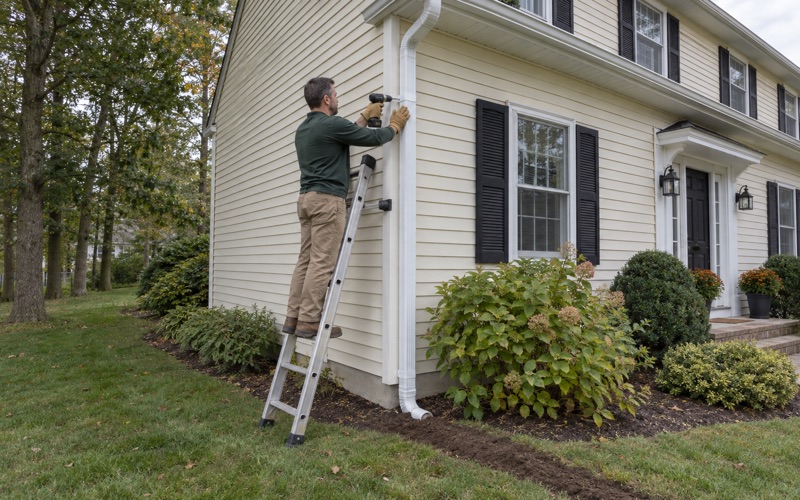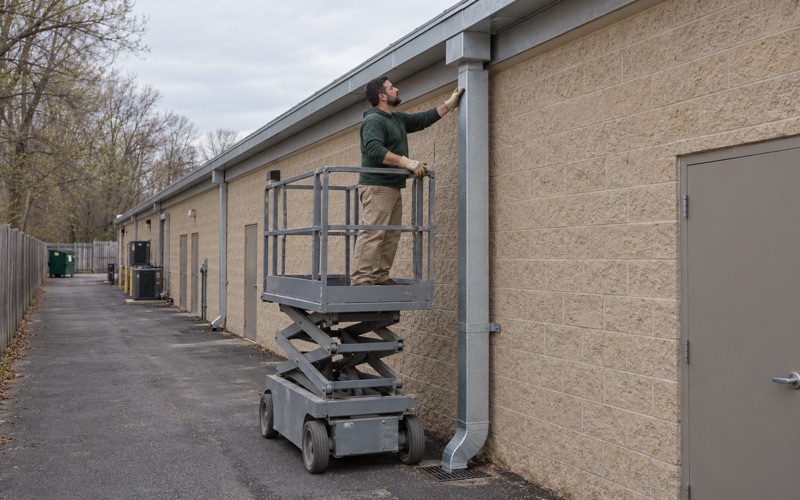
Howell Gutters installs, repairs and cleans gutters in Eatontown, and after more than 20 years of this trade we know that the right gutter for a house depends on the roof above it and the ground below it. We size every gutter and downspout to the roof area that drains into each run, rather than reaching for whatever size went up last time.
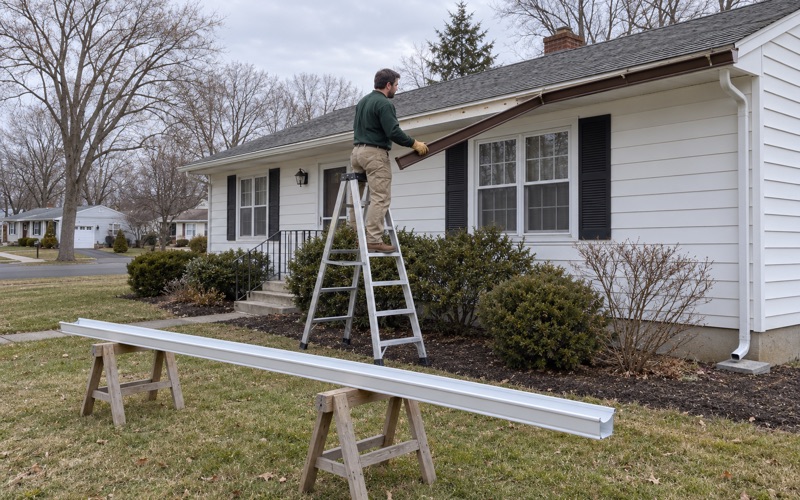
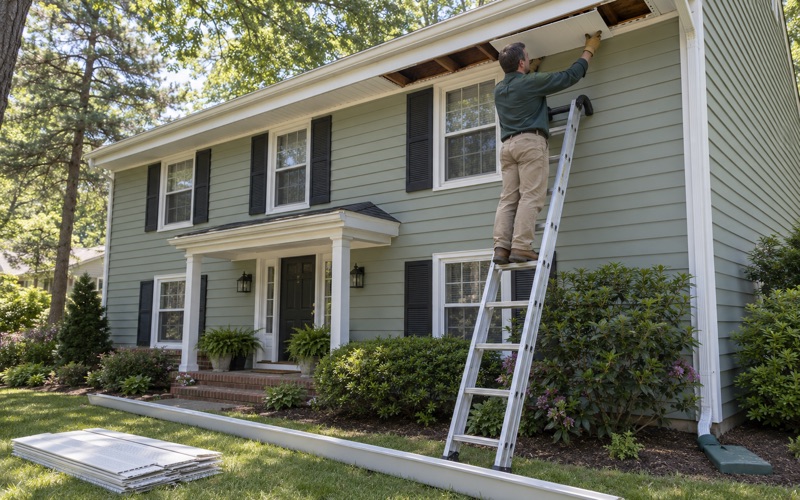
Our seamless gutters are formed on site from coil, so each run of the house is a single piece with no joints along its length. Before anything new is hung, we check the fascia board behind the old gutter for rot, and if we find soft wood we show it to you before we replace it. Nothing gets covered up that you have not seen.
On some Eatontown streets the question is not only which gutter works best but which gutter keeps the building looking the way it does now. That question comes from the borough’s land use code, and it shapes how we quote, match and install gutters on older buildings. The rest of this page walks through what the code says, what it leaves out, and how we handle the gap.
Gutters in Eatontown’s Historic District
What the HD Zone Regulates
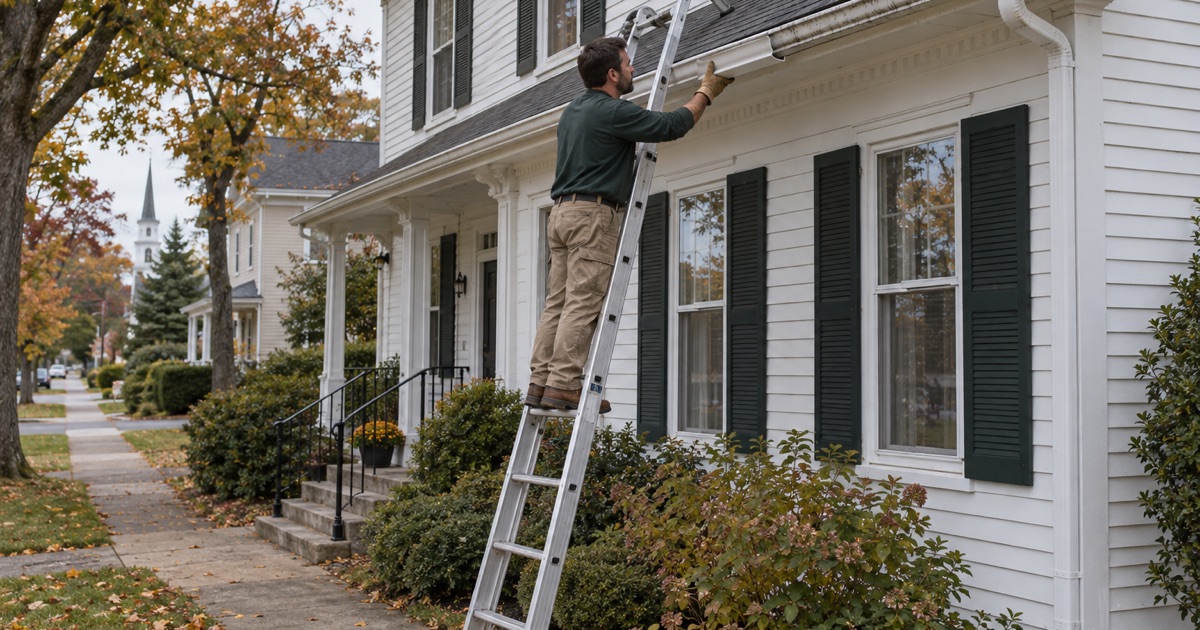
Eatontown’s land use chapter sets aside an HD Historic District zone, and § 89-44F governs what happens to buildings inside it. The list of regulated activities starts with any change in the exterior appearance of a building, structure or improvement, whether that change comes by addition, reconstruction, alteration, replacement or maintenance. New construction, demolition, relocation, signs, shutters, fences and awnings are on the list too.
A regulated activity needs a certificate of appropriateness from the Planning Board before the work goes ahead. When the Board reviews an application, the code tells it to consider the general design, arrangement, texture, material and color of the building. Those last three words matter for anyone hanging gutters, because a gutter is one of the most visible horizontal lines on a facade.
Where the Historic Core Sits
The borough’s historic core is the old Broad Street and Main Street area around Wampum Lake. The Eatontown Historical Committee’s walking-tour brochure of Broad Street points to the Masonic Lodge, built 1822 to 1824, the Columbian House from about 1831, 21 Broad Street from 1801, and St. James Memorial Church at 69 Broad Street, built in 1866 and listed on the National Register in 1978.
The code itself gives no street boundary for the zone. It refers instead to a list of structures kept by the Historical Committee by address and block and lot. The zone map and that list are what decide coverage, so we never assume a particular building is inside or outside the district. On any older property near the core, we ask the Construction Department before we order material.
Older Housing Beyond the Core
Older buildings are not confined to a few blocks. Census estimates count 415 Eatontown housing units built in 1939 or earlier and another 195 from the 1940s, and more than half the borough’s units date from 1950 through 1979. On a house of that age the fascia and trim are usually painted, and when work disturbs paint on a pre-1978 house we follow the EPA Renovation, Repair and Painting rule.
Looking for gutters closer to Millstone Township? See Gutters in Millstone Township.
What § 89-44F Exempts, and What It Leaves Unsaid
The Identical-Material Exemption
Not every exterior job in the HD zone goes to the Planning Board. Section 89-44F(17)(b) exempts ordinary repairs and maintenance, and the exact replacement of existing architectural details, as long as the work does not alter the building’s exterior appearance. Among the listed examples is complete replacement of existing material with identical material, along with roofing repair that makes no change in design, scale or appearance.
The same list covers identical replacement of siding and exterior painting of existing structures. On paint, the code adds that the Historical Committee may recommend colors harmonious with those already used in the district. Read together, the exemptions suggest a simple test: if the finished work looks the way the building looked before, it is maintenance, not a change in appearance.
An Ordinance Silent on Gutters
Here is the part worth knowing before any quote. The words gutter, leader, downspout, cornice and trim do not appear anywhere in § 89-44F. The ordinance regulates appearance, material and color in general terms and leaves the reader to work out where a gutter falls. Nothing in it names gutter work as either regulated or exempt.
Separately, New Jersey’s construction code, at N.J.A.C. 5:23-2.7(c)1.xvi, lists the repair, replacement or installation of exterior gutters and leaders as ordinary building maintenance. That settles the state permit question, but it is a separate question from the borough’s design review, which turns on how the finished work looks rather than on whether a permit is needed.
Like-for-Like Versus a Change in Appearance
Our working reading is this. Replacing a gutter with the same profile, the same metal and the same color fits the identical-material exemption, because the building looks no different afterward. Swapping half-round for K-style, copper for aluminum, or one color for another changes what a passerby sees, and a change in exterior appearance is exactly what the ordinance sends to the Planning Board.
That reading is an inference from the text, not a ruling, and the Construction Official is the one who decides how the ordinance applies to a given building. When an owner in or near the district wants to change the look of the gutters, we raise the question with the Construction Department before work is scheduled, so a design decision never gets ahead of the paperwork.
Matching is usually the simpler path. Many owners on older streets want the house to look as it always has, only with gutters that hold water again. In that case we measure the existing profile, note the metal and finish, and quote a replacement that reproduces them, so on our reading the job stays on the maintenance side of the line.
Half-Round, K-Style, Copper and Color
Reading the Profile Already There
Before we can match a gutter, we have to identify it. Half-round gutters have a semicircular trough and are often hung on older houses with exposed brackets, while K-style gutters have a flat back and a decorative front that echoes crown molding. We also note whether the half-round carries a double-bead profile on its front lip, since that detail shows from the street.
Size, hanger style and downspout shape are part of the look too. A 6-inch K-style run with 3x4 downspouts reads differently from a 5-inch run with round leaders, and hidden hangers leave a cleaner face than the spike and ferrule method. On a like-for-like job we record each of those details so the new run sits where the old one did.
Matching appearance does not mean ignoring capacity. We still size each gutter and downspout to the roof area draining into it, and where the original run was undersized we lay out the options plainly: a matched replacement that keeps the look, or a larger size that is a visible change and a question for the borough first.
Copper and Patina
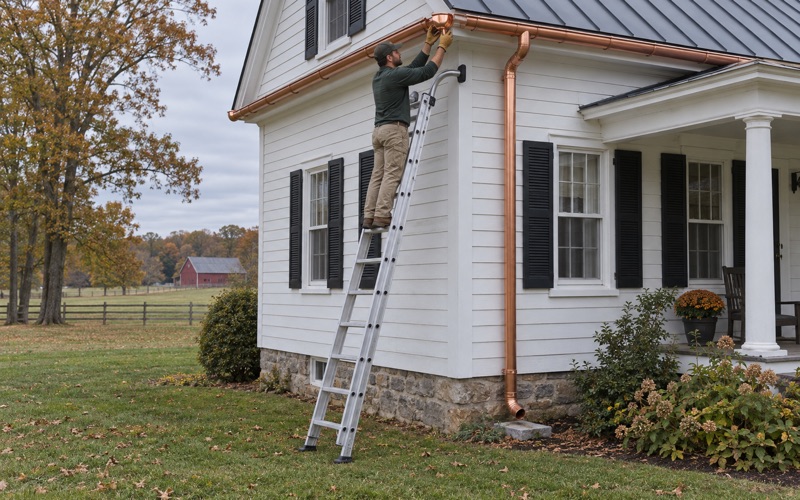
We choose copper and half-round only where they suit the period and style of the building, and on a historic facade that judgment carries extra weight. We work in 16-ounce copper, and new copper starts bright before it darkens and eventually develops a green patina. Replacing aged copper with new copper is identical material, but owners should expect the new section to look brighter for a while.
Going the other way is where caution pays. Trading copper for aluminum, even good .032 aluminum coil, changes the material and the color a reviewer would see, which is the kind of change § 89-44F asks the Planning Board to weigh. If budget pushes an owner toward aluminum on a copper-trimmed building, we flag that before the estimate is signed.
Matching Gutter Color
Color is named outright in the factors the Planning Board considers, so a new gutter color on a building in the zone is not a small detail. Aluminum gutters come prefinished in a range of colors, and on a matched job we pick the closest finish to what is up there now. Where the existing gutter has been painted, we discuss whether to paint the new run to match.
Who Reviews Historic District Work in Eatontown
The Historical Committee’s Advisory Role
Ordinance 19-2022, adopted after a public hearing on December 7, 2022, amended the borough’s rules on certificates and permits for historic sites and structures. Under the amended § 39-8, the Historical Committee serves as a review or advisory committee to the Construction Official, the Zoning Board and the Planning Board on applications for historic sites and for building permits within the Historic District Zone.
The Committee advises; it does not issue approvals. Its role means a permit application for a building in the zone can draw comments on design before a decision is made. When an owner needs to describe proposed gutter work for that kind of review, we put the details in writing: profile, metal, color, size and hanger type, stated plainly.
The Planning Board and the Construction Official
The Planning Board decides on a certificate of appropriateness, but it is not the office that hands it over. Under § 89-99D, the Construction Official issues a certificate for a structure in the Historic District on the Board’s approval and written direction, and a building permit for regulated work waits on that certificate. The Construction Department is on the second floor of the Municipal Building at 47 Broad Street.
For an owner, the order of steps is what counts. Confirm whether the building falls in the zone, decide whether the gutter work matches what is there, and only then schedule the job. We would rather spend a phone call on that question at the start than install a run that has to come down.
Where the Water Goes and What the Estimate Shows
Appearance is only half of a gutter’s job. Eatontown’s sewer code, at § 266-12, lists roof leaders among the prohibited connections to sanitary sewer lines, and Chapter 283 separately bars illicit connections to the storm sewer system. We never tie a leader into the sanitary sewer, and every estimate states where each downspout will discharge, with an extension, pop-up emitter or drywell proposed if the water lands against the foundation.
Our estimates also put new gutters and repair work on separate lines, because New Jersey treats them differently for sales tax: a new gutter system is an exempt capital improvement, while a repair is taxable. Contracts follow the state’s home improvement rules, including the three-day cancellation notice, so an owner weighing a matched replacement against a design change has time to check with the borough first.
- 20+ Years in Business
- Seamless Gutters Formed On Site
- Before-and-After Photos