Howell Gutters has spent more than 20 years installing, repairing and cleaning gutters in Asbury Park and the rest of Monmouth County, and near the ocean the first question we ask is about metal. Salt in the air changes which gutter, which fasteners and which maintenance routine will hold up, and it changes what a manufacturer’s warranty will actually cover once the system is on the house.
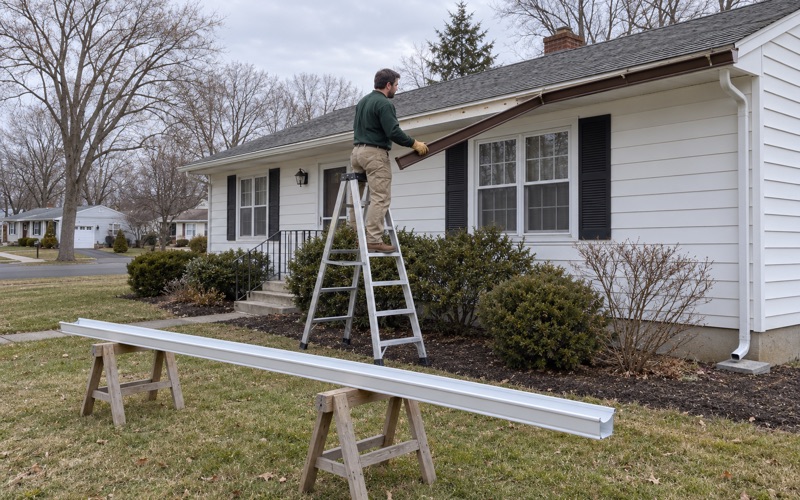
We form seamless gutters on site from coil, one piece for each run, and we size gutters and downspouts to the roof area that actually drains into them. On a shore house that sizing work comes paired with a materials conversation: aluminum, copper, the hangers that hold them, and how each one behaves when it sits in salt-laden air for years.
This page explains what Asbury Park’s own buildings have shown about salt and steel, what two gutter and metal manufacturers write into their warranties for coastal homes, why copper and aluminum should not share a drainage path, and the rinse and inspection routine we recommend, and document, for a house close to the water.
Salt Air on the Asbury Park Oceanfront
What the Casino Closure Put on the Record
Salt damage near the boardwalk is documented here rather than assumed. In May 2023 the city closed the Casino, the boardwalk building that opened in 1929, indefinitely after an engineering inspection found the steel trusses holding up its roof starting to rust away. Mayor John Moor put it plainly: the salt air was getting into the steel.
That was a large public structure on the oceanfront, not a house, and no source we have found describes corrosion of a private gutter in the city. We mention it because it shows the exposure is real in this particular town, and it is the same exposure gutter makers have in mind when they write coastal limits into their warranties.
Convention Hall and the Copper Panels
The same week, The Coaster reported the mayor pointing to places where salt air and salt water were getting into Convention Hall, mostly where copper panels had been removed. Where the cladding was gone, the salt had a way in. On a house, the gutter line is one of those edges where metal, wood and water all meet.
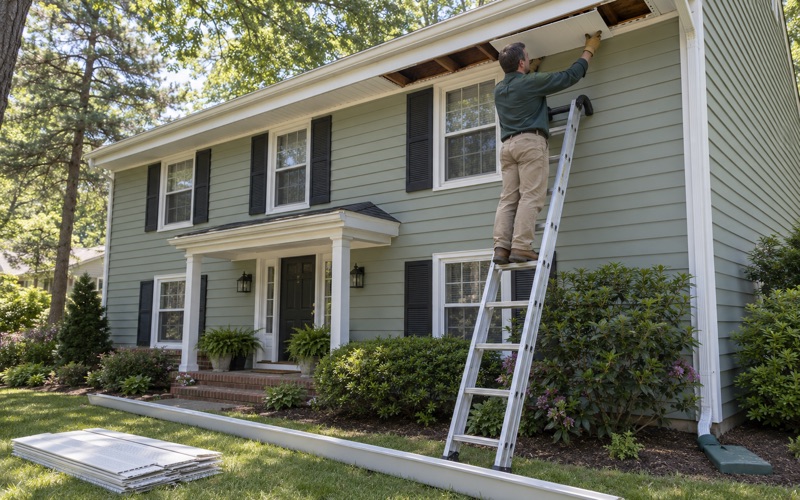
That is why our installs start at the fascia. We check the board behind the gutter for rot before anything new goes up, and we show the owner any soft wood before replacing it. A sound fascia and a tight gutter apron or drip edge keep wind-driven spray and runoff from working into the roof edge.
Older Houses Near the Water
Asbury Park’s housing skews old. Census estimates count 3,225 homes built in 1939 or earlier, out of 8,681 in the city, and the town’s 1890s houses were built in a full range of Victorian styles. On a house that old, the gutter on it now is rarely the first one, and its metal and hangers may not match the trim around it.
The city’s property maintenance code puts gutter upkeep on the owner: § 13-304.7 says roof drains, gutters and downspouts shall be maintained in good repair, and that repairs or replacement must match, or be similar to, the style and color of the existing. We keep that in mind when a coastal metal swap is on the table.
Looking for gutters closer to Eatontown? See Eatontown Gutters.
Gutter Warranties Written for the Shore
Englert and the Half-Mile Rinse
Englert’s warranty for prepainted aluminum, revision 7 from 2022, sets a condition for product located less than a half mile from a seacoast, salt water or brackish water. The owner must perform annual maintenance that includes a fresh tap water rinse, which the document calls a sweet water rinse, under AAMA 610.1-1979, and keep records of it.
That document lists formed roofing, fascia, mansard, wall panels, siding and soffit; it does not name gutters. We cite it because it shows how a major metal maker treats salt exposure on painted aluminum, and the fascia wrap and soffit around a gutter are often the same kind of material. If a house sits inside that half mile, a yearly rinse costs little and keeps a paper trail.
Alside’s Sea-Salt Exclusion
Alside’s 20-year limited warranty on its aluminum rainware and gutter systems is more direct. It excludes damage from exposure to corrosive atmospheres, naming those containing sea salt as an example. In other words, the coverage a homeowner assumes comes with the product may not reach the very damage a shore homeowner worries about most.
The same warranty is void if the property has copper on its roof or anywhere water may be directed into the aluminum gutters. That clause matters on older Asbury Park houses, where a copper valley, a copper bay roof or old copper flashing can sit upslope of a newer aluminum run without anyone noticing the connection.
What We Do With Those Terms
Distance to salt water varies across the city, and we know of no count of how many houses fall inside any of these limits. So before we quote, we read the warranty for the product being offered, tell you which conditions could apply at your address, and write the metal, gauge and fasteners on the estimate.
New gutters and repair work go on separate lines, because New Jersey taxes them differently: new gutters are an exempt capital improvement documented on Form ST-8, while repairing gutters is a taxable repair. Our contracts follow the state’s home improvement rules, including the three-day cancellation notice, so the warranty conditions and the paperwork sit together.
Copper and Aluminum: What Not to Mix
Why Copper Runoff Is the Problem
Copper and aluminum are both good gutter metals on their own. The trouble starts when water that has run over copper drains into aluminum, which is exactly the condition Alside’s warranty names as voiding coverage. We trace the roof above every run before we quote, looking for copper valleys, caps, bay roofs and flashing that shed into the gutter.
When we find copper upslope, there are a few honest options. The run below it can be copper as well, the copper detail can be redirected so it drains elsewhere, or the owner can choose aluminum knowing that particular warranty would not apply. We put whichever choice you make in writing rather than leaving it to a later dispute.
Hangers, Fasteners and Roofing Nails
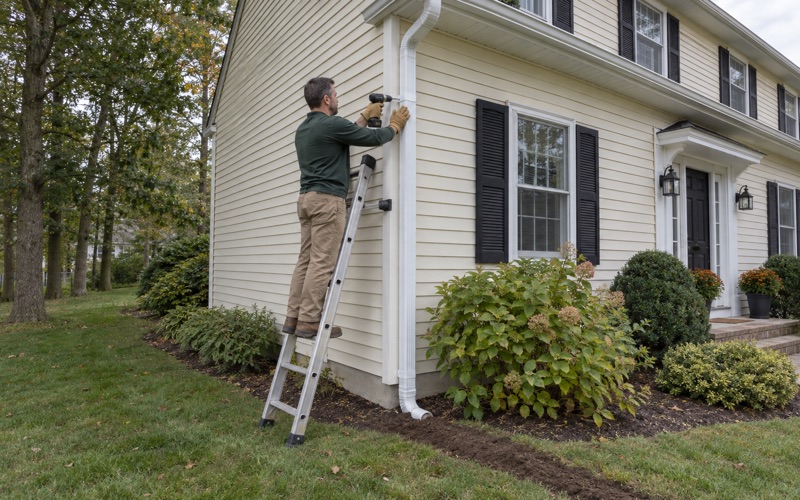
Fasteners are where mixed metals hide. A hidden hanger, a spike and ferrule, a strap or a screw is a small piece of metal in constant contact with the gutter, and in salt air a mismatched fastener can become the weak point before the gutter itself does. We match hanger and screw material to the gutter metal on every run.
For roofing, FEMA’s Hurricane Recovery Advisory No. 2 recommends stainless steel nails when building within 3,000 feet of saltwater. That is guidance for asphalt shingle nails, not a code requirement and not a gutter rule, but it points the same direction: closer to the ocean, fastener metal deserves a deliberate choice rather than whatever is in the truck.
Matching Metal to the House
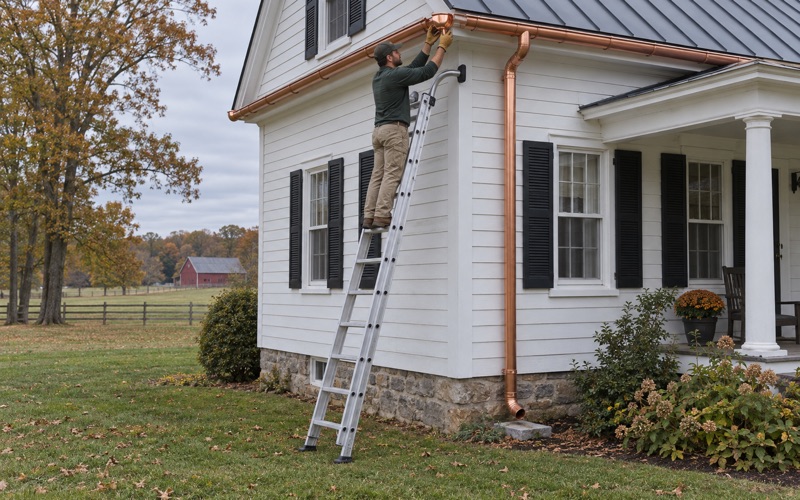
On a Victorian or early 20th-century house, 16-ounce copper or half-round gutters with a double-bead profile often suit the trim better than K-style aluminum. We match copper and half-round work to the age and style of the house, and copper lets the system avoid the copper-into-aluminum problem entirely when the roof already carries copper details.
For most other houses, 6-inch K-style seamless aluminum in .032 coil with 3x4 downspouts is a sound, economical choice, sized to the roof area each run drains. Copper weathers to a patina and has no paint to wear, while prepainted aluminum benefits from the yearly rinse described below. We explain both before you decide.
A Rinse and Inspection Schedule for Shore Gutters
A Yearly Fresh-Water Rinse
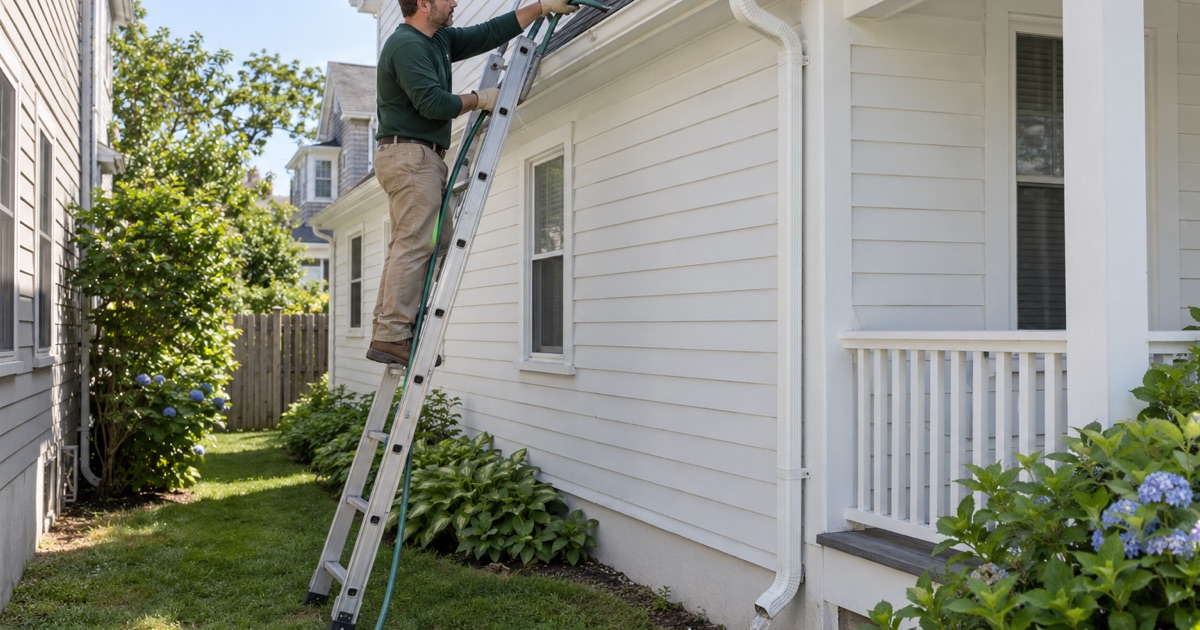
For a house near the water, we suggest a yearly fresh-water rinse of the gutters, downspout faces, fascia wrap and soffit on a set date. A garden hose at ordinary pressure is enough for the job. Write the date down, or let us handle the rinse during a cleaning visit and log it for you.
Every cleaning visit flushes each downspout and bags the debris, so nothing is left on the lawn or at the curb, and every cleaning and repair comes with before-and-after photos. Those dated photos can support the maintenance record a warranty like Englert’s asks an owner to keep for painted aluminum near salt water.
What We Look For on Each Visit
On inspection we look at hanger heads and screws for rust staining, at miters and end caps for failing tripolymer sealant, and at the paint on aluminum for chalking or blistering near seams. We also check the kickout flashing where a roof edge meets a wall, since a missing kickout sends water down siding instead of into the gutter.
Guards are matched to the trees on the lot. A yard shaded by oaks needs a screen built for leaves, while a lot with few trees may not need a guard at all. Where we install guards near the ocean, we lean toward stainless steel micro-mesh, which has no paint to chalk or peel in salt air.
Where the Water Goes
City code bars roof leaders and downspouts from the sanitary sewer, and we never tie a leader outlet into it. Every estimate says where each downspout will discharge, and we follow each one to where its water lands. If it lands against the foundation, we propose an extension, a pop-up emitter or a drywell instead.
On a rental, that upkeep usually falls to the landlord, and renters occupy 72.3 percent of the city’s occupied homes. In an association or condominium building, we check the master deed or management office first so the owner knows who is responsible for the gutters before any rinse schedule or replacement is agreed.
- 20+ Years in Business
- Seamless Gutters Formed On Site
- Before-and-After Photos